After leaving Palermo, Sicily, we drove west for a stop at the Greek archeological site of Segesta. Slightly inland, it lies in the foothills with majestic views all the way to the ocean. Not actually built by the Greeks, the Doric Temple was built by Sicilian indigenous people known as Elymians. The temple, which has no roof, dates back to 430 B.C.

We took a shuttle bus to the very top where the amphitheater lies (about 1600 feet above sea level). It was built around the same time as the temple. Particularly fortunate, was the fact that we could walk all through the amphitheater - usually, you just get to look at it from afar or as we found out in later amphitheaters, they have been modified to hold modern day concerts.

The view to the ocean from the amphitheater was spectacular.

We continued driving inland and south, to the small coastal village of Marinella di Selinunte. Next to the village, situated on a high plain, abutting the ocean, are the remains of the beautiful Greek city of Selimunte. Built around 400 B.C., it had well over 100,000 inhabitants. Later on, however, the city was laid to waste by the Carthagenians - in a mere nine days. We hiked several kilometers over the entire area.


During our stay in Marinella, we got a lucky tip from our hostess, Maria, for a local fish restaurant. She recommended we have dinner at the “Boomerang”, a very plain looking restaurant, situated on an old parking lot (oddly enough, with no view at all). All the other restaurants were by the beach or the pier with nice ocean views. For 25 euros each, Maria promised us a unique fish dinner with all the trimmings - wine included. A bit skeptical at first, we decided it was worth the gamble.
It turned out to be one of those golden finds that you savor for years to come. Wine and bread was served immediately, quickly followed by a platter of lightly fried fish - something like a sole. A few minutes later, another platter of fish was placed in front of us. This routine continued for six more courses, including calamari, eel, barbecued sardines on a stick and large shrimps. At the end, they asked if we wanted more of anything!!! When we said no, the dessert came. Consisting of a bowl of cherries and enormous canoles that somewhat resermbled a fish, we survived. Somehow, we ate it all.


The next day, Maria suggested we visit Gibellina Vecchia, a village that had been destroyed completely by an earthquake in 1968. A new village had been rebuilt in its place several miles away. But where the old village existed, the landscape artist Alberto Burri, had entombed the village in cement, with the narrow streets separating the monoliths of cement. Gibellina was quite a sight, reminiscent of the Jewish Holocaust Memorial in East Berlin. It was an eerie feeling, walking in between the cement blocks.
Later, we drove through the new Gibellina and found it to be awful, except for the unusual statues everywhere. The rest of the town looked more like a concrete jungle than Gibellina Vecchia.


We went on an afternoon excursion to Mazara del Vallo, a city west of our village that has Arabic heritage. Unfortunately, we went there in the afternoon, during a time most things close. We should have gone there in the evening, as Maria had instructed us to do, when the golden yellow hues exude from the town. Alas - next time.


Although our brief stop at Scala dei Turchi was brief, the coast of Realmonte was very beautiful.

Agrigento was our next stop, a large city on the southern side of Sicily that is host to the Valley of the Temples. After getting settled into our B&B which was located at the top of a hill, we went off to the local Lidl to get our groceries for the evening meal. We managed to prepare a very nice dinner, and in the morning had a delicious Sicilian poolside breakfast put on by Barbara, our hostess.
After breakfast we headed off to the splendid archaeological park of Valley of the Temples. Built between 500 B.C. and 430 B.C. these temples offer spectacular insight into the Greek prowess of architecture.

We couldn’t walk through many of the sites, but just to observe them was an awesome sight. The architecture, the engineering and the overwhelming manpower that it took to build these long lasting structures was simply amazing.


Above is the statue of Icarus, the Greek mythology figure who attempted to escape Crete by creating wings from feathers and wax.

More down to earth is a photo our pool. Our Sicilian breakfast was served behind the white curtains. On one of the mornings, Barbara served us quail eggs - very tiny little eggs with some bacon pieces on a piece of toast. Delicious.


After our lovely stay in Agrigento we headed off to Avola. On our way Avola, we stopped to at Ragusa, a hilltop city where baroque architecture rules.


After a bit more driving, we would up in Avola. After our last B&B, the setting was a bit more humble. Our abode consisted of a kitchen, bathroom and a huge bedroom, none of it with outside light. But it was home for the next three days and it was close to several of the things we wanted to visit, notably Noto and Siracuse.

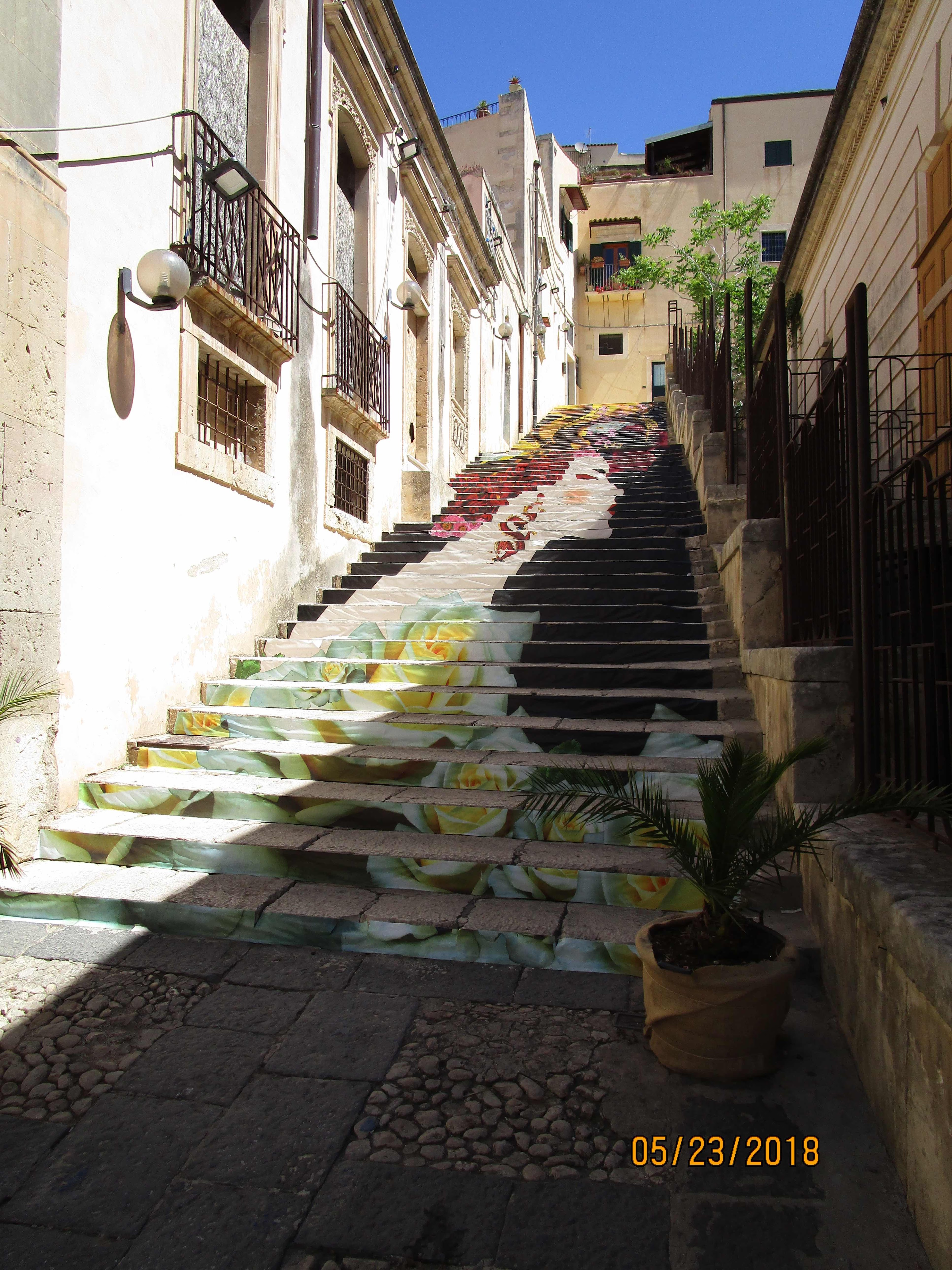
Noto’s architecture is all about baroque. The city planning and it’s architecture is completely baroque. The city (as were seven other cities in Sicily) were completely destroyed in the 1693 earthquake. Noto was completely rebuilt on a site a few miles away. The builders took a lot of thought into its design in terms of layout, architecture and panoramic views. Much of it was built using local limestone.



We stopped by a local merchant and bought a couple of bottles of wine. Then, noticing the large barrels on the right, I asked if I could purchase any of the wine in them. “Of course!” he replied. I tasted a bit of it and found it to be a supple, very drinkable table wine. We bought some it that he filled in plastic bottles. It cost 2-3 euros.
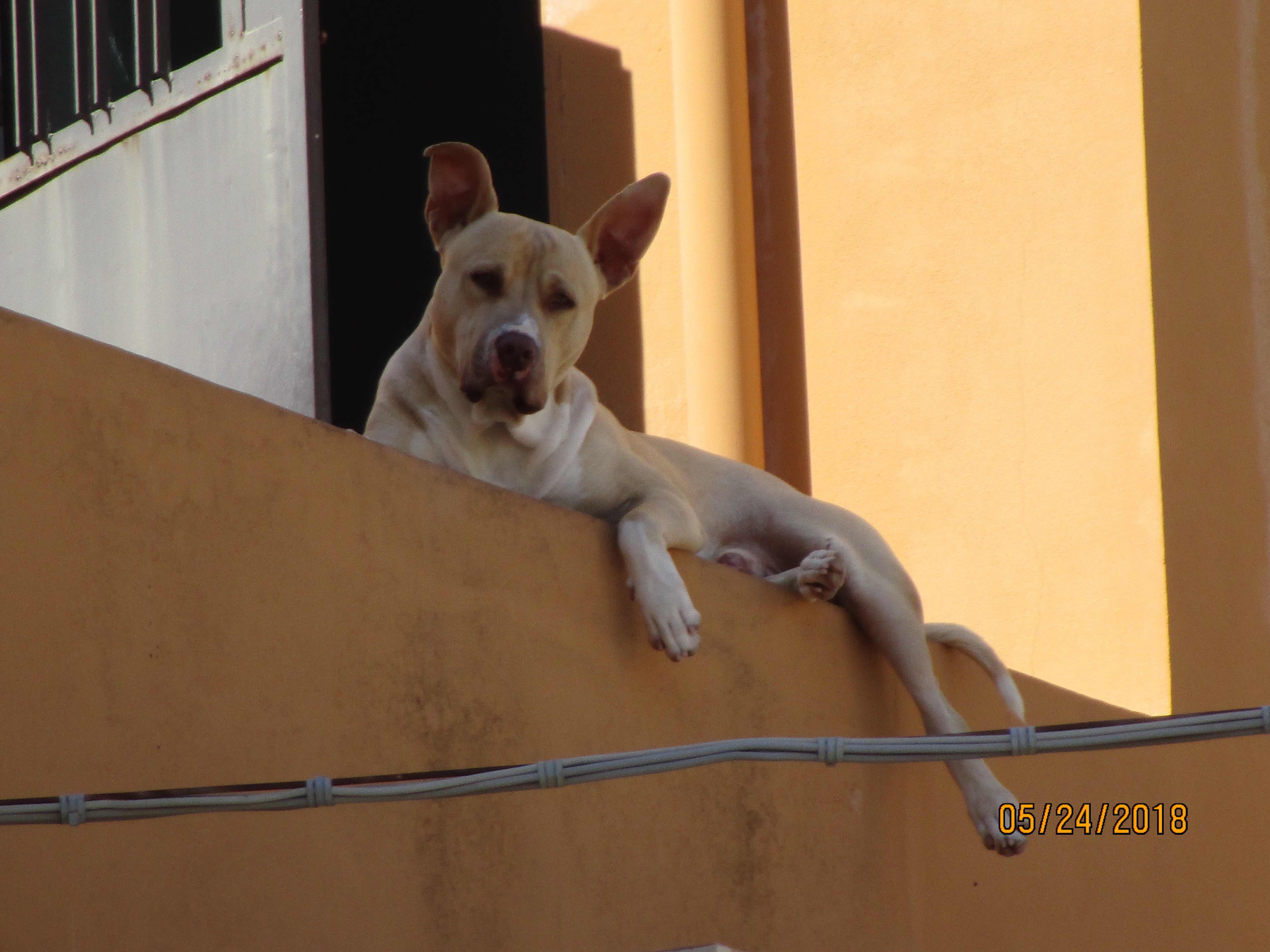
Above is a dog who would watch us leaving our lodging in the mornings. He just seemed curious and didn’t bark.
The following day, after our Noto adventure, we drove to Siracuse. Home to Archimedes and many others, Siracuse was at one time the epitome of economic, political and military might. The city itself is very vibrant with numerous cafes, restaurants, bars and a colorful market. But it also is home to numerous important archeological sites, such as the Temple of Apollo.


Above is the Temple of Apollo.


Below is the “Ear of Dionysius”. It’s an enormous limestone cave carved out of a hill right in the city of Siracuse (with great echoes, I might add). Above the ear is an enormous Greek theater that, today, has been modified to host concerts.

In spite of doing a lot of walking during the day, towards the end of the day, we still found enough energy to pay a visit to the archeological museum. Not that it was around the corner. It was over a kilometer away, but well worth it. It had magnificent specimens of ceramic works from as far back as 500 B.C.
What fascinated me most about the ancient architecture, the amphitheaters, the sculptures and tombs was that these cultures showed a great need to express themselves. Also, they were able to devote a lot of effort into things other than the labor of simply existing. The use of slave labor was, of course, a given and helped tremendously.


While walking back to our car, we stopped to see this impressive modern day church, the Sanctuary of Our Lady of Tears.
While walking back to our car, we stopped to see this impressive modern day church, the Sanctuary of Our Lady of Tears.

Our last morning on the rooftop deck of our humble lodging. It was now time to head to our last place to stay, a home on the east side of Mount Etna.


