Komodo and Rinca Island.
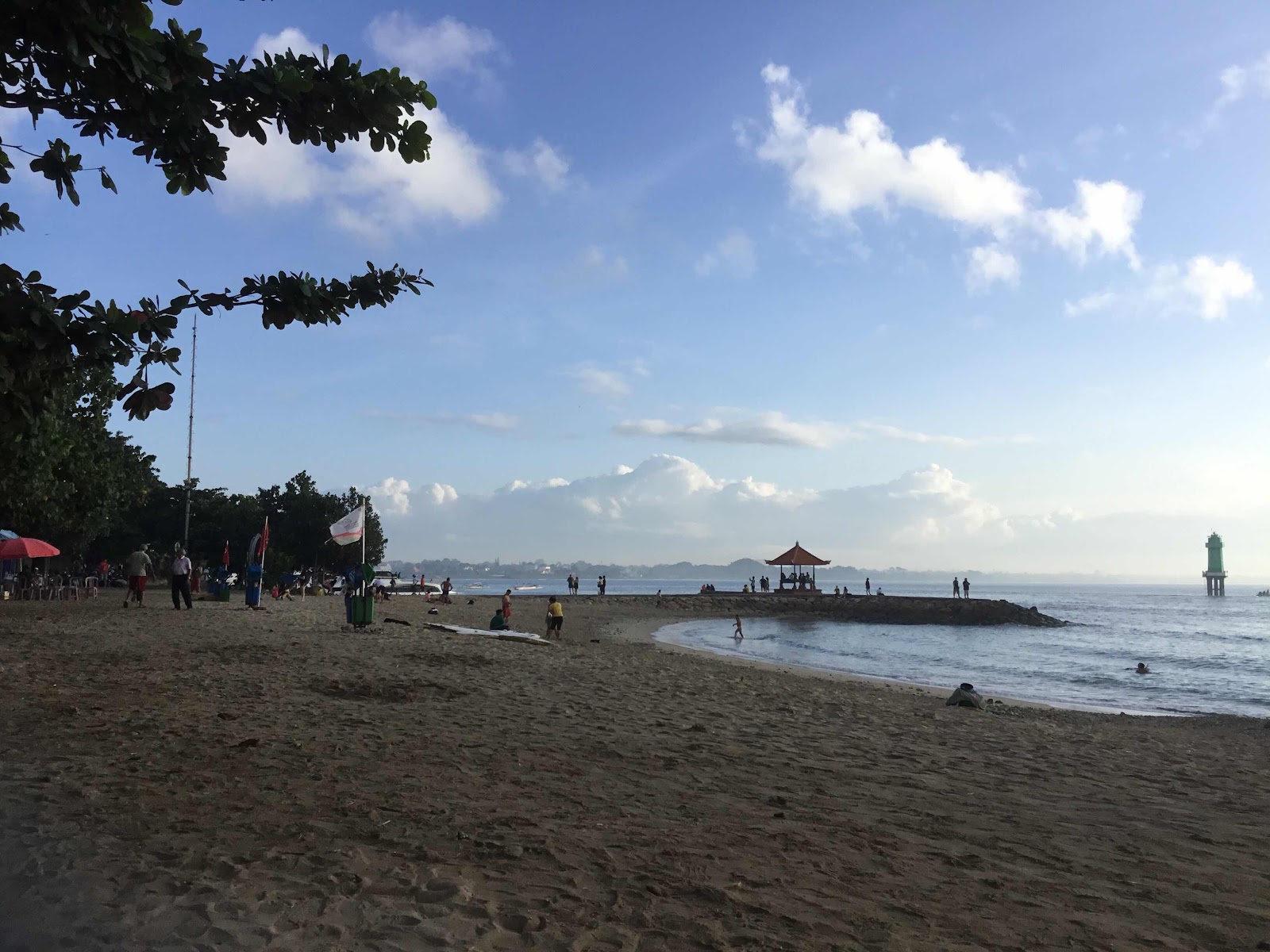
When we got back to Bali from Kalimantan, we opted to stay near the airport, in Jimbaran. The plan was to stay for a few days then be off to Flores to mingle with the Komodo dragons. Jimbaran is on the west side of Bali, so this time we got to see sunsets.
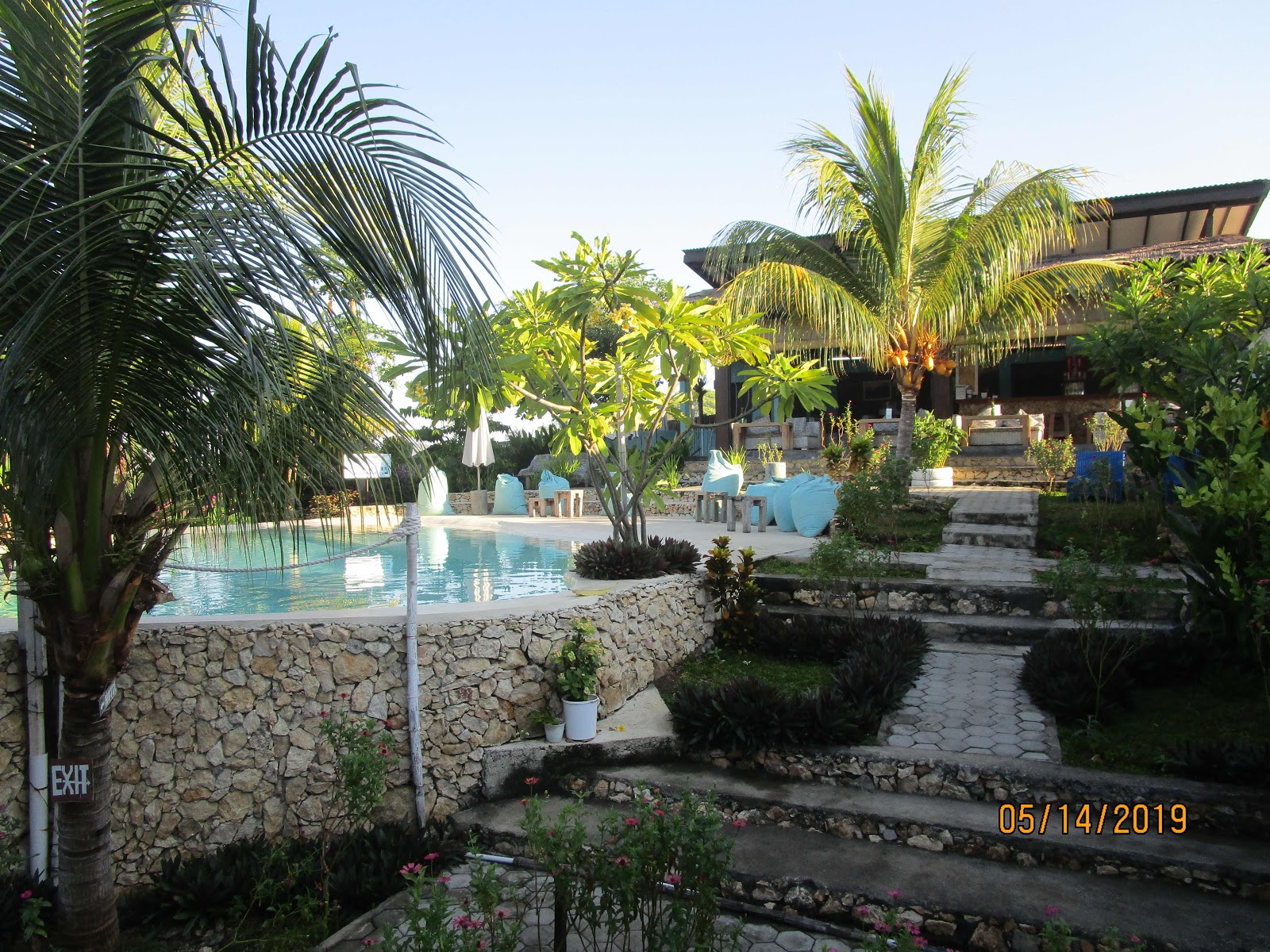
We stayed at the Keraton Jimbaran Beach Resort, a bit more plush than were used to, but Bali prices made it quite affordable (and it too, like most places, included a fabulous breakfast with our stay).
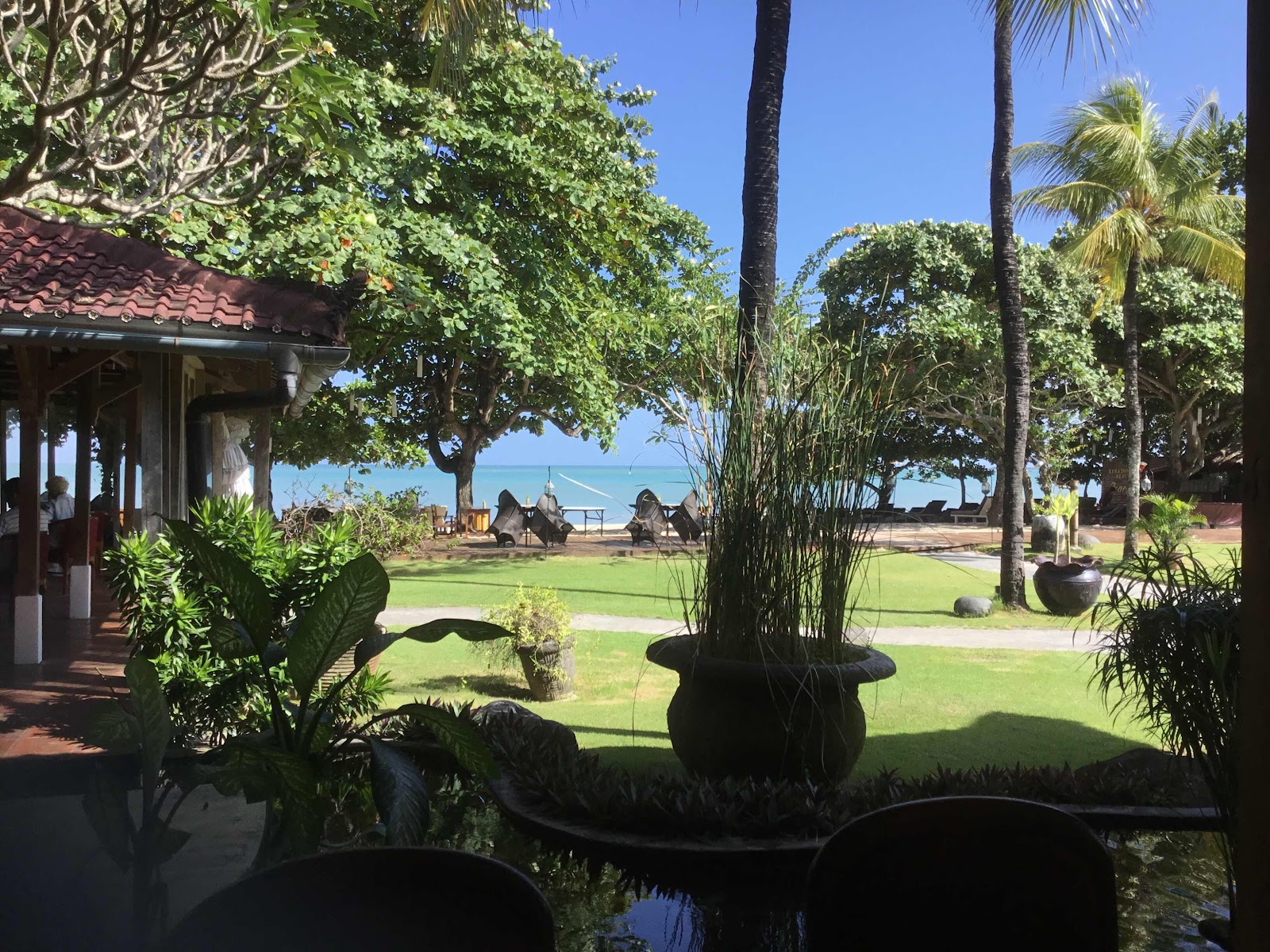
Breakfast was served buffet-style at the building to the left.
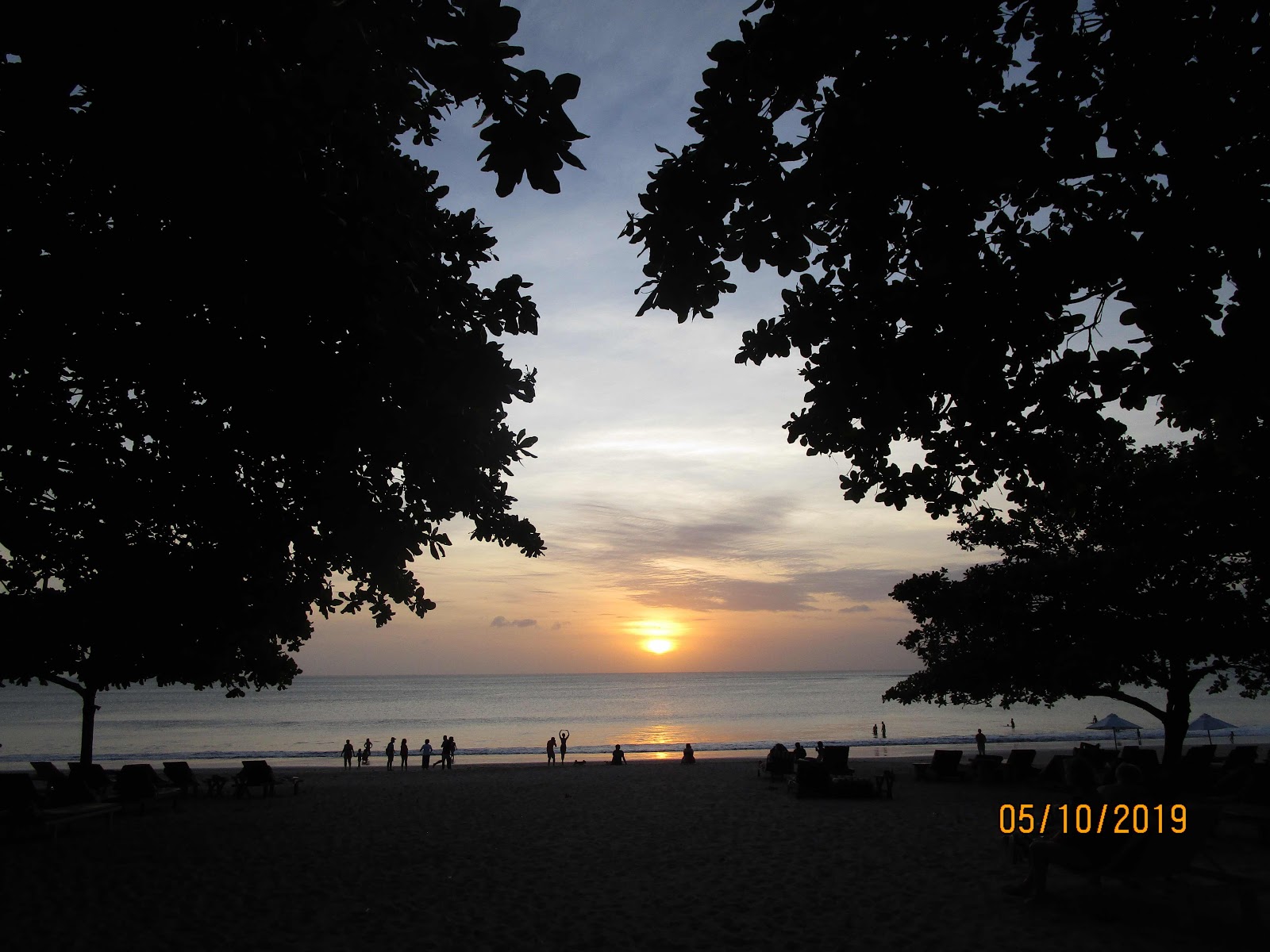
Sunsets were spectacular.
Sunsets were spectacular.
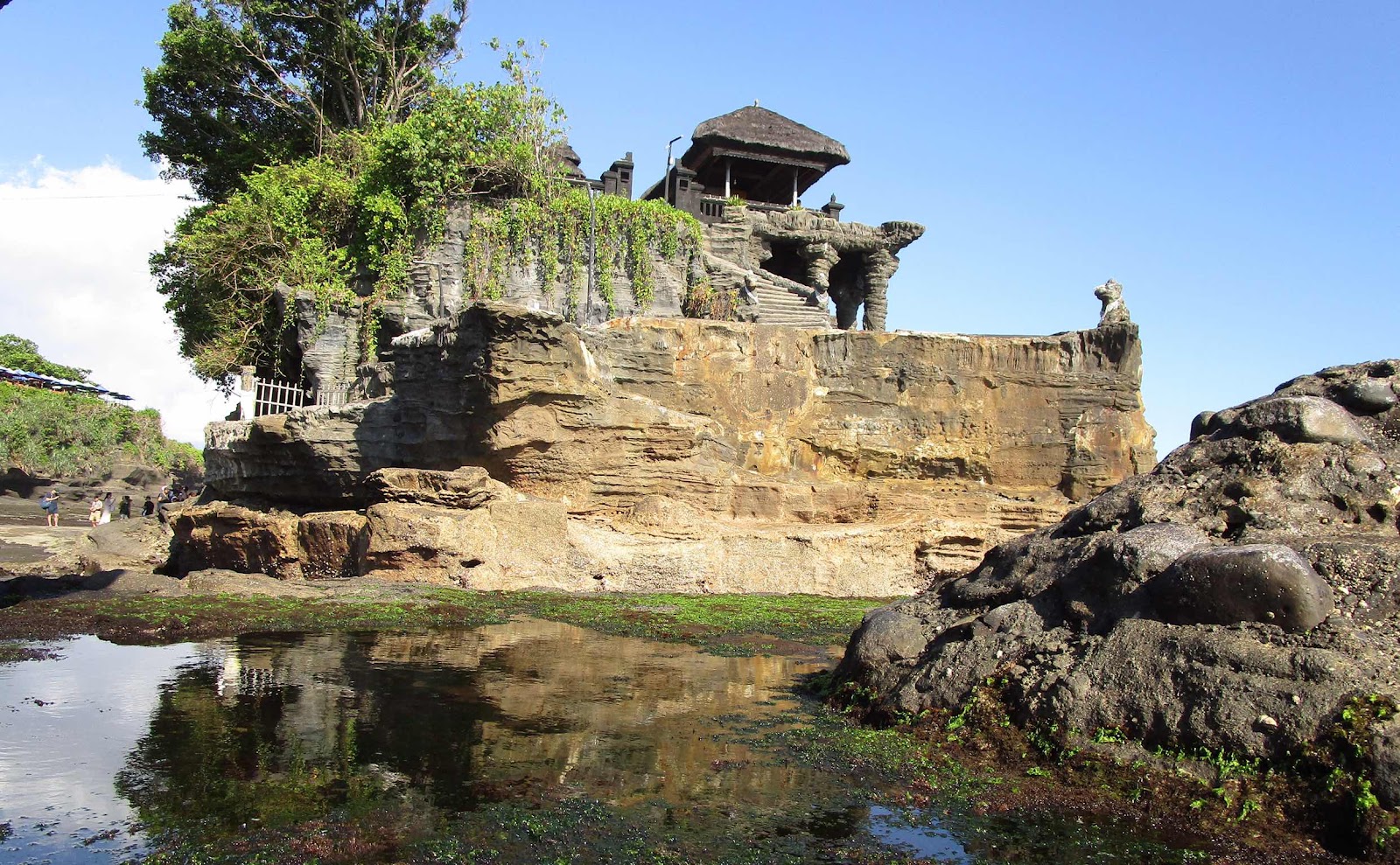
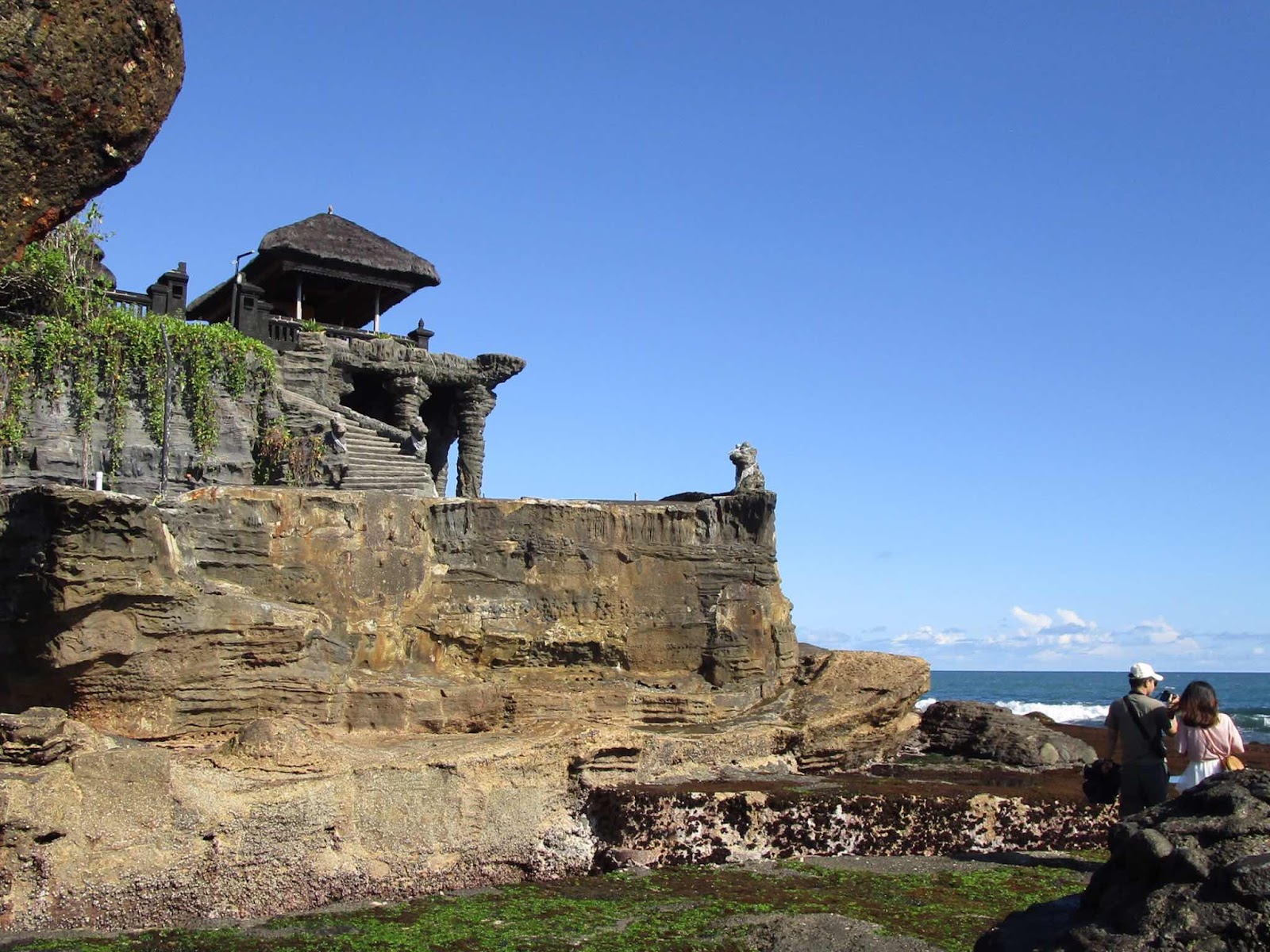
Nyoman, who had become our de facto driver, came and picked us up on one of the days to take us to the very southern tip of the peninsula to visit the Uluwatu Temple and stop at a couple of the well known surf spots such as Suluban and Bingin beaches.
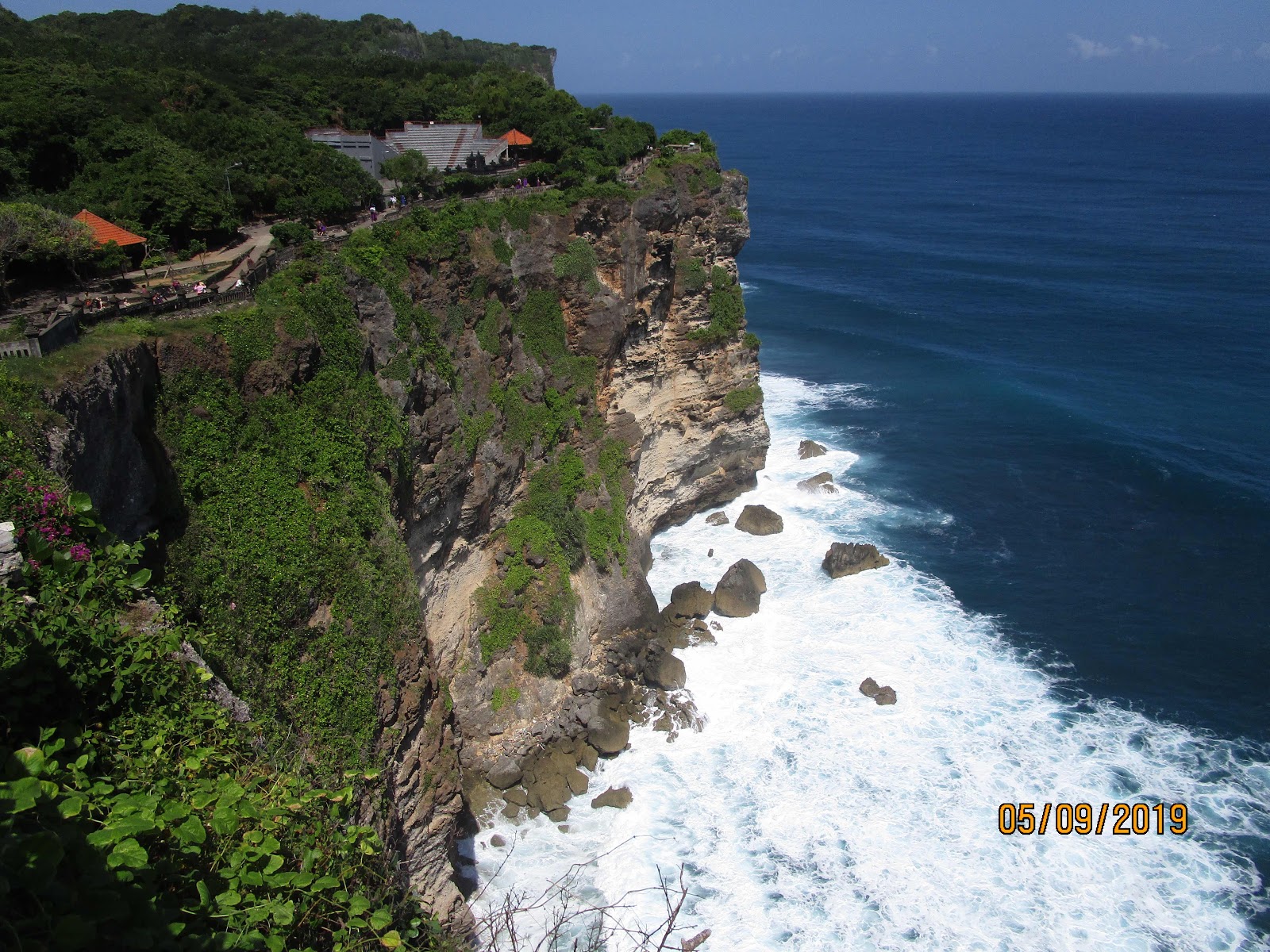
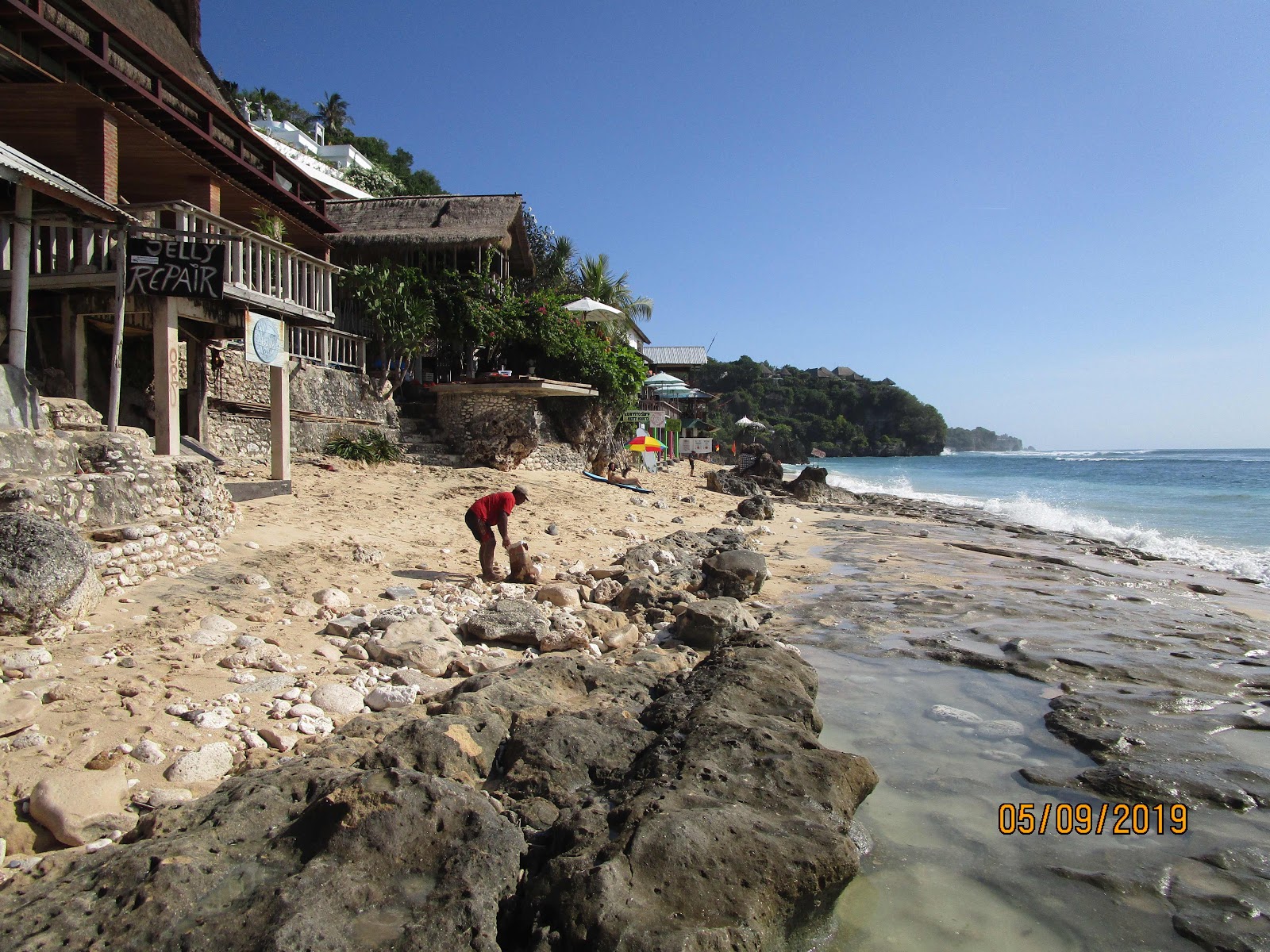
The days went by fast and before we knew it, again we were heading to the airport. This time it was a flight from Bali (Denpasar) to Labuan Bajo, Flores.
We arrived in Labuan Bajo in 1 1/2 hours. Our hotel had someone waiting for us at the airport to pick us up. The Wae Molas hotel is a quaint little oasis in the midst of a somewhat impoverished looking area. The hotel is owned by an American (Michael Lederer) from Wisconsin. It was very a comfortable and friendly place with a good restaurant and bar.
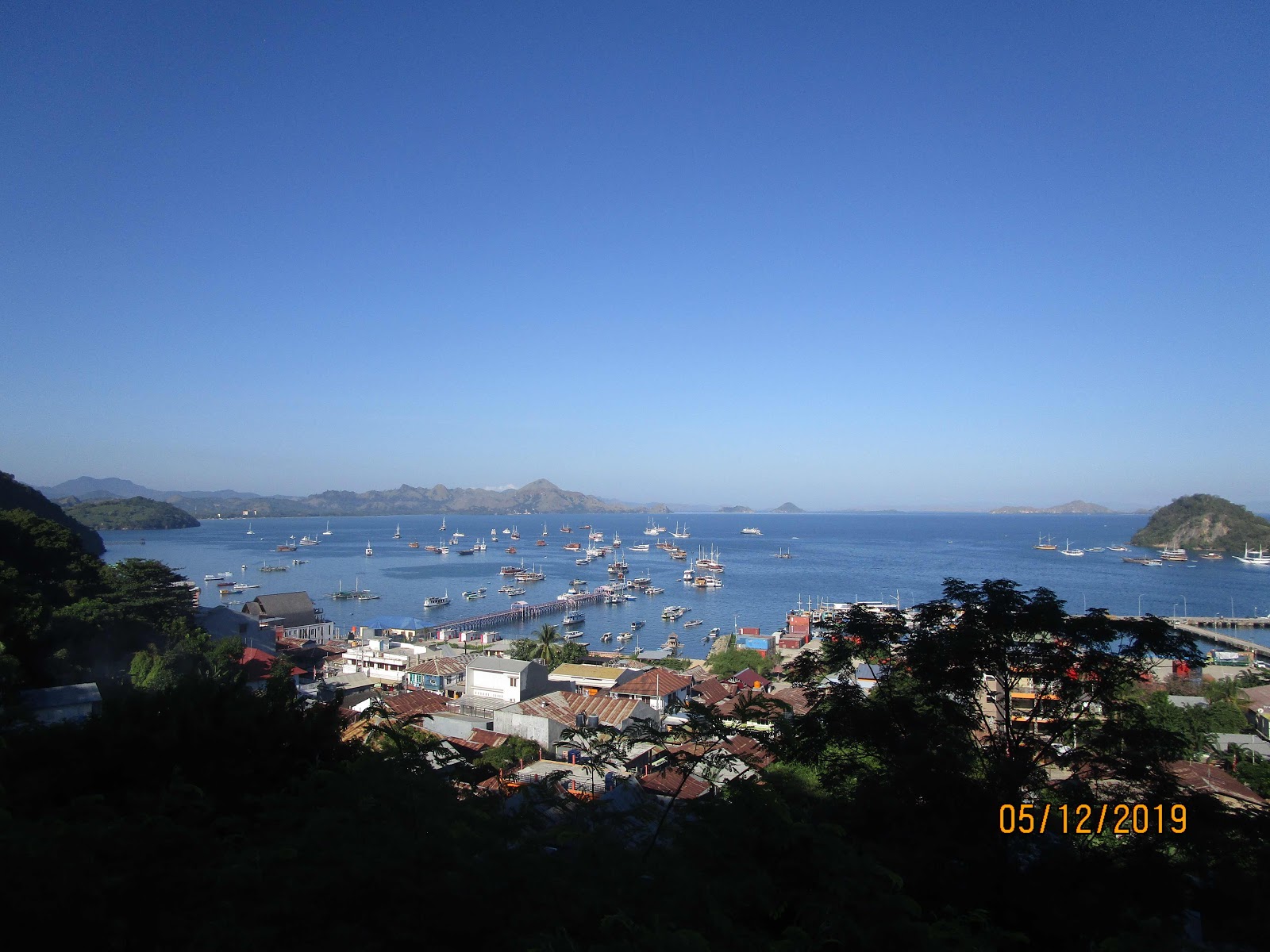
View of Labuan Bajo.
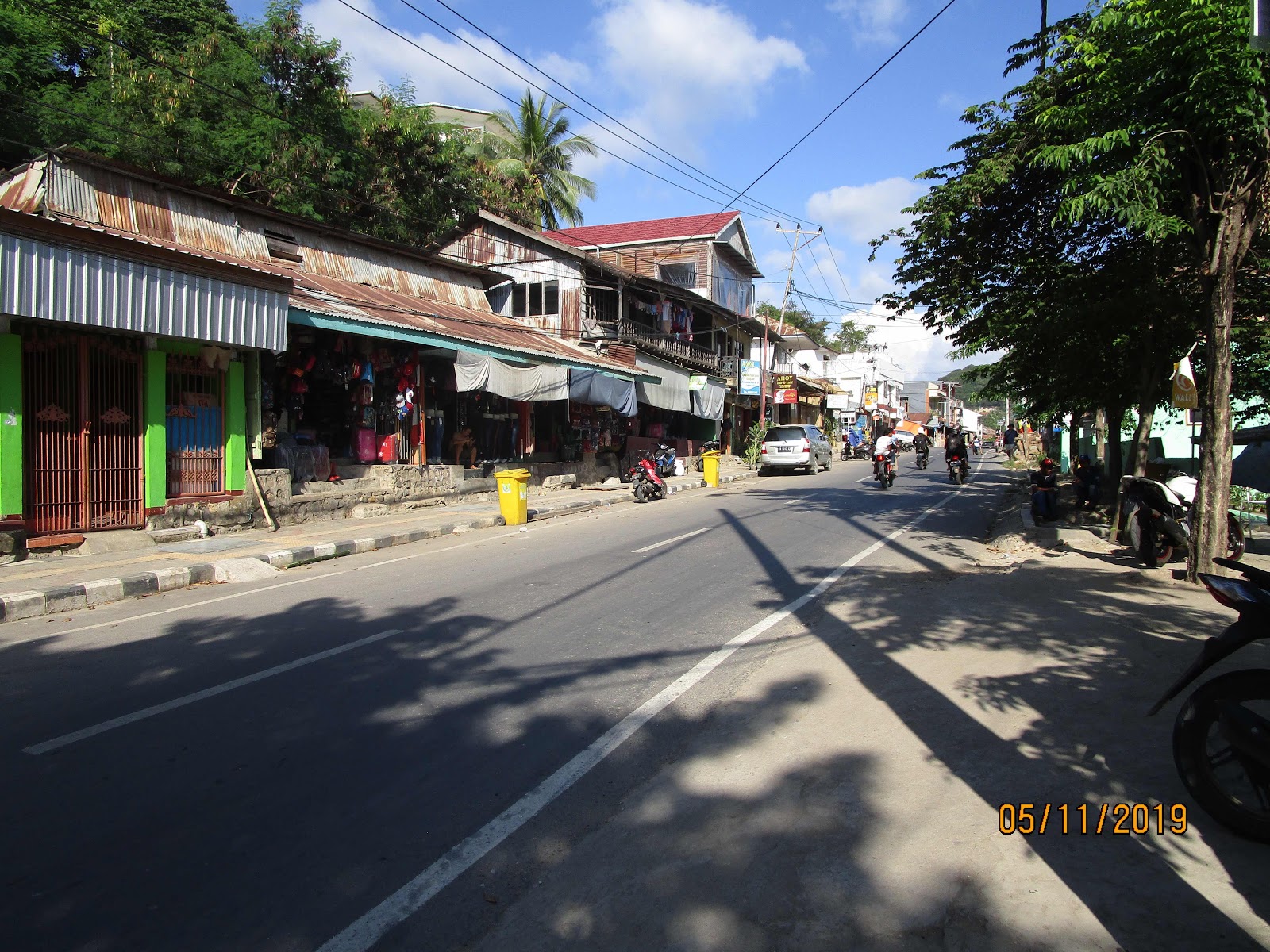
A street near the Wae Molas.
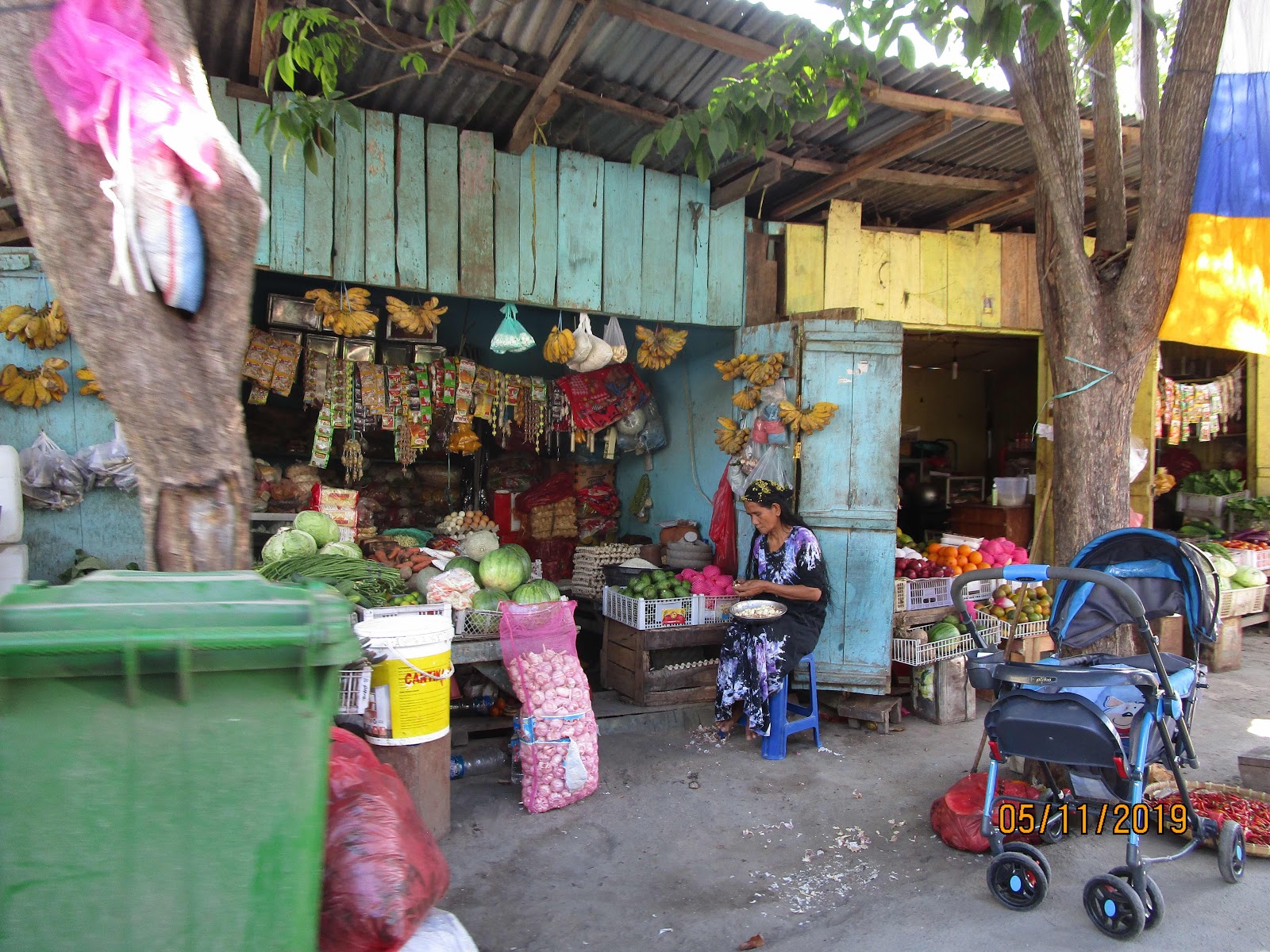
Typical shop on the street.
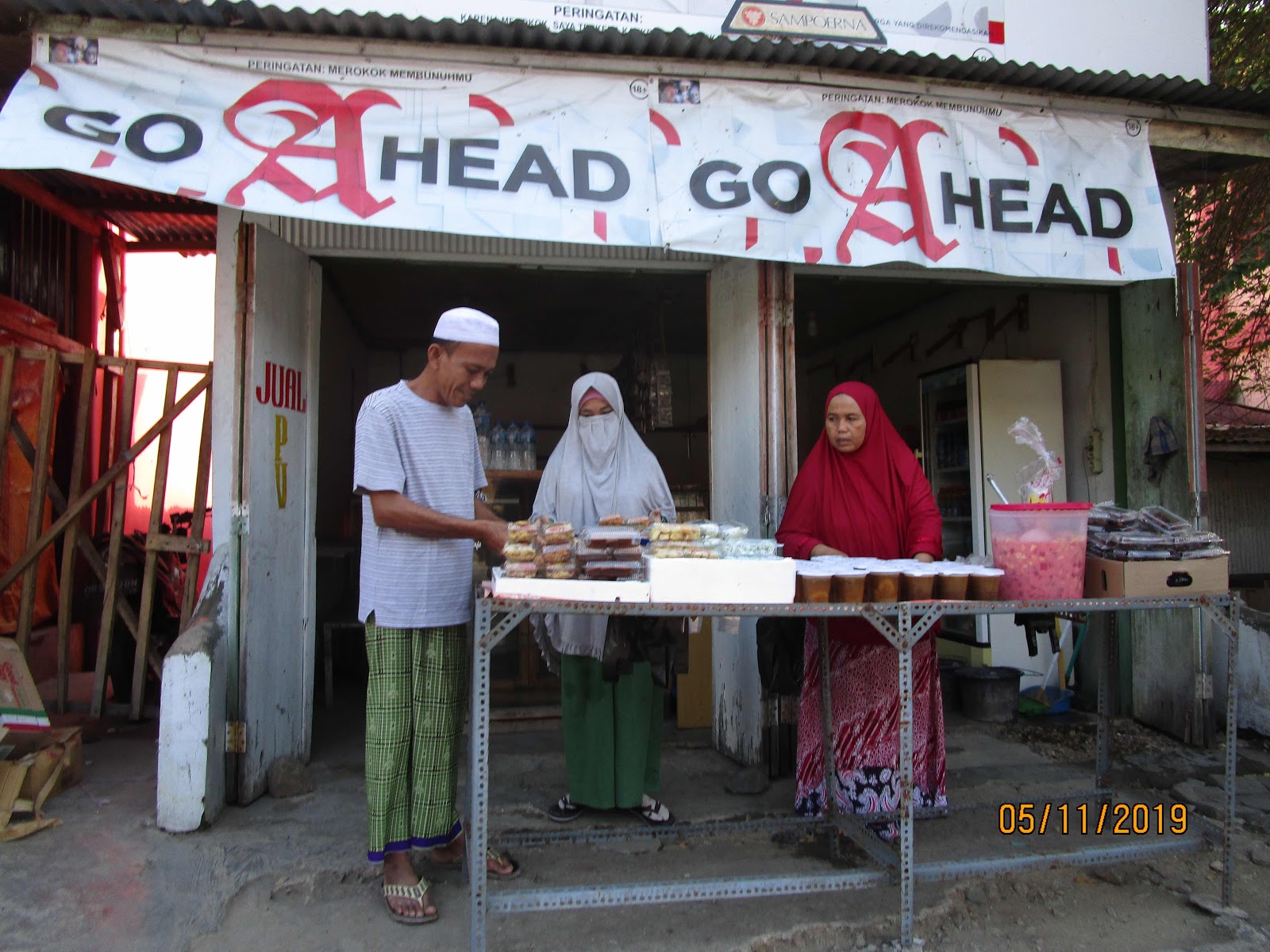
There were many of these “pop-up” shops along the street. It appeared to be a special occasion.
There were many of these “pop-up” shops along the street. It appeared to be a special occasion.
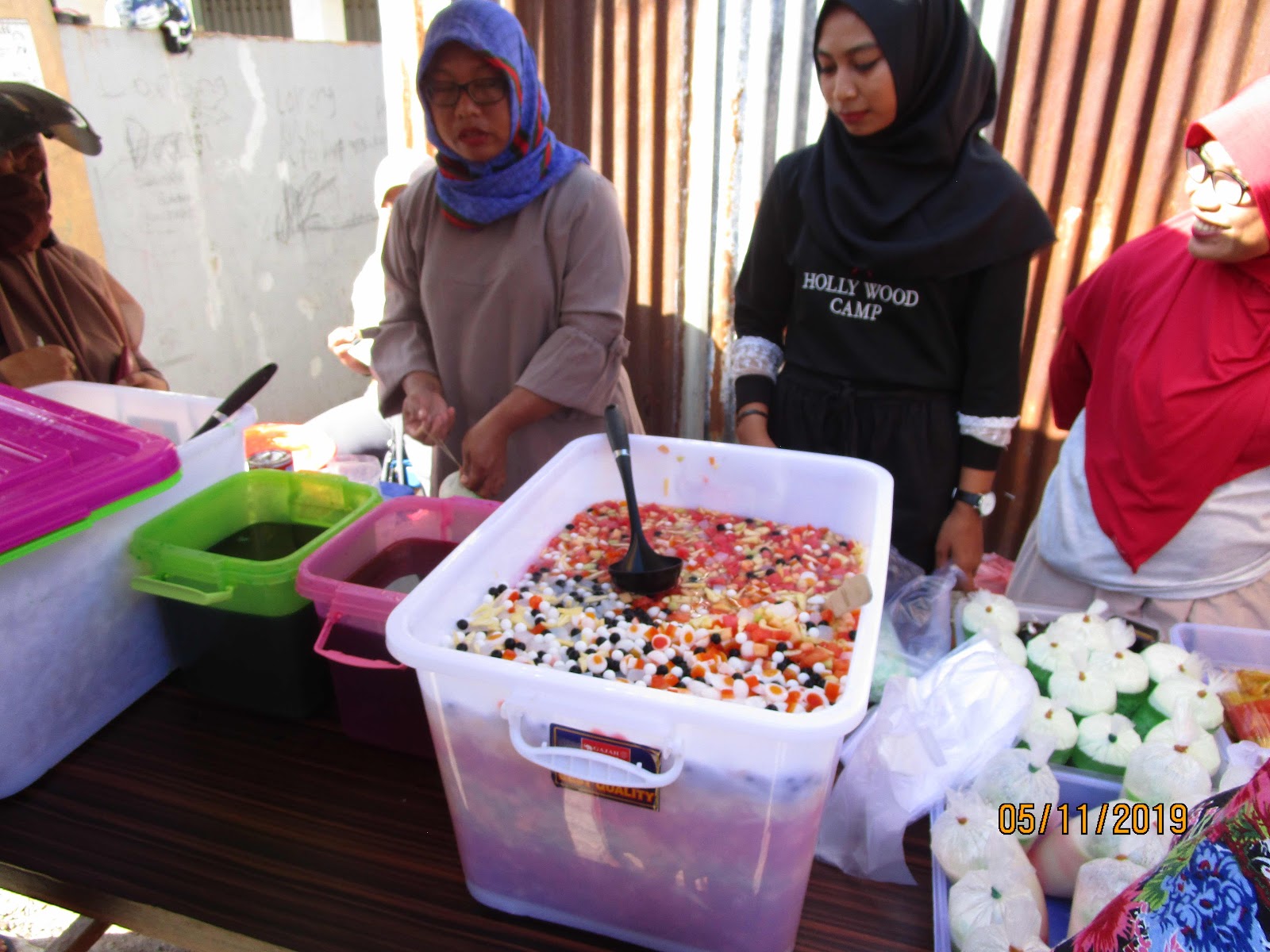
Like in Borneo, all the islands except Bali are Muslim - that means Ramadan, fasting during the day and lots of call to prayers.
Marsy, our guide from the tour company, soon arrived to acquaint us with what was going to happen the following day, when we were to board the the boat to Komodo Island. That evening we had dinner by the pool at the Wae Molas.
In the morning, Marsy was at our hotel promptly at 8am. He drove us to the busy harbor in Labuan Bajo and boarded what was to be our home for the next couple of days. The boat was configured much differently than on our previous excursion in Borneo. It had a single deck, with two cabins (one for us and one for Marsy - the crew slept wherever), a bathroom, galley in the back, and a sitting/dining area positioned in front of the steering house.
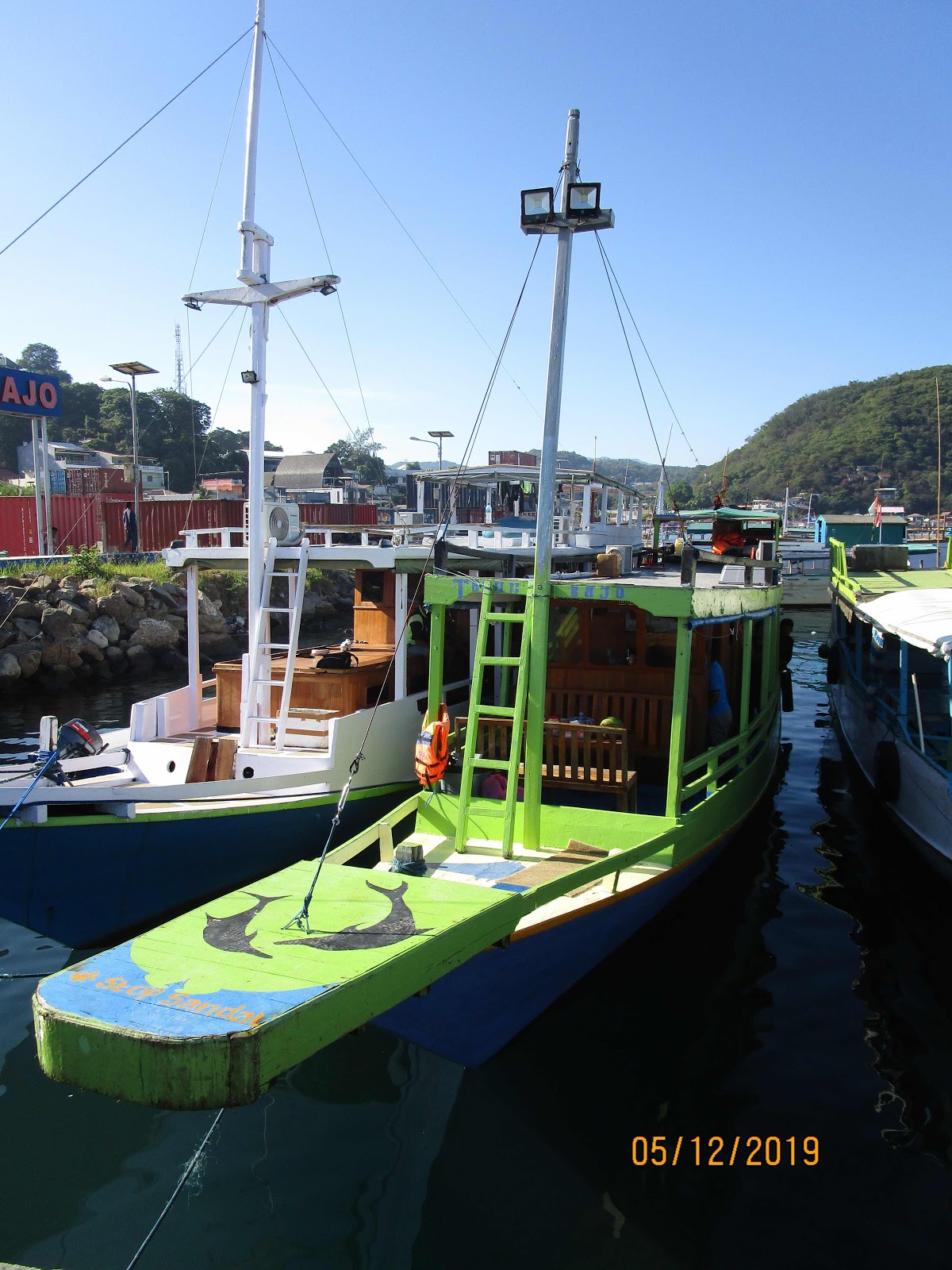
Home for the next two days.
We were quickly underway, deftly maneuvering between the dozens of boats all berthed around us. Marsy brought out a chart of the area and showed us the proposed itinerary. Our first activity was going to be snorkeling with the turtles.
We weren’t alone when we arrived at our snorkeling spot. Several other boats were anchored, some with snorkelers while others were diving. After getting our snorkeling gear on we ventured into the water - it was warm, probably around high 70’s to low 80’s. The coral was quite good and we soon started spotting lots of fish and a number of turtles.
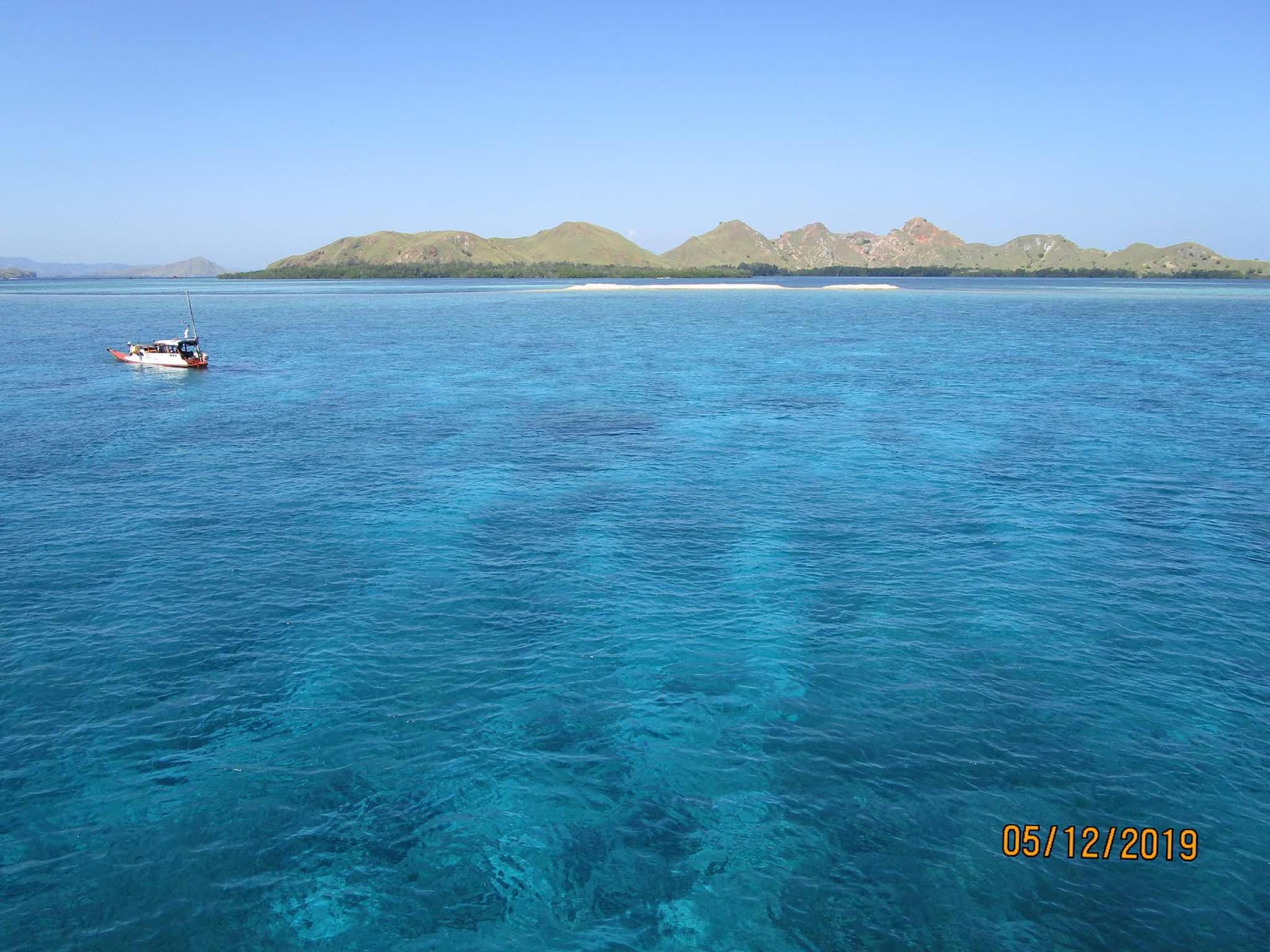
The water was only about 20-30 feet deep. Great for snorkeling, although there were some diving groups around.
Next up was a spot where the manta rays congregated. It was only a short hop and we were in the water again. Diane and I both commented how spectacular the coral appeared - colorful, a huge variety of soft and hard coral and lots of fish. We did find some small manta rays but the highlight to us was the vibrant coral. After the snorkeling we anchored by a tiny, eyebrow-shaped island, where we had lunch.
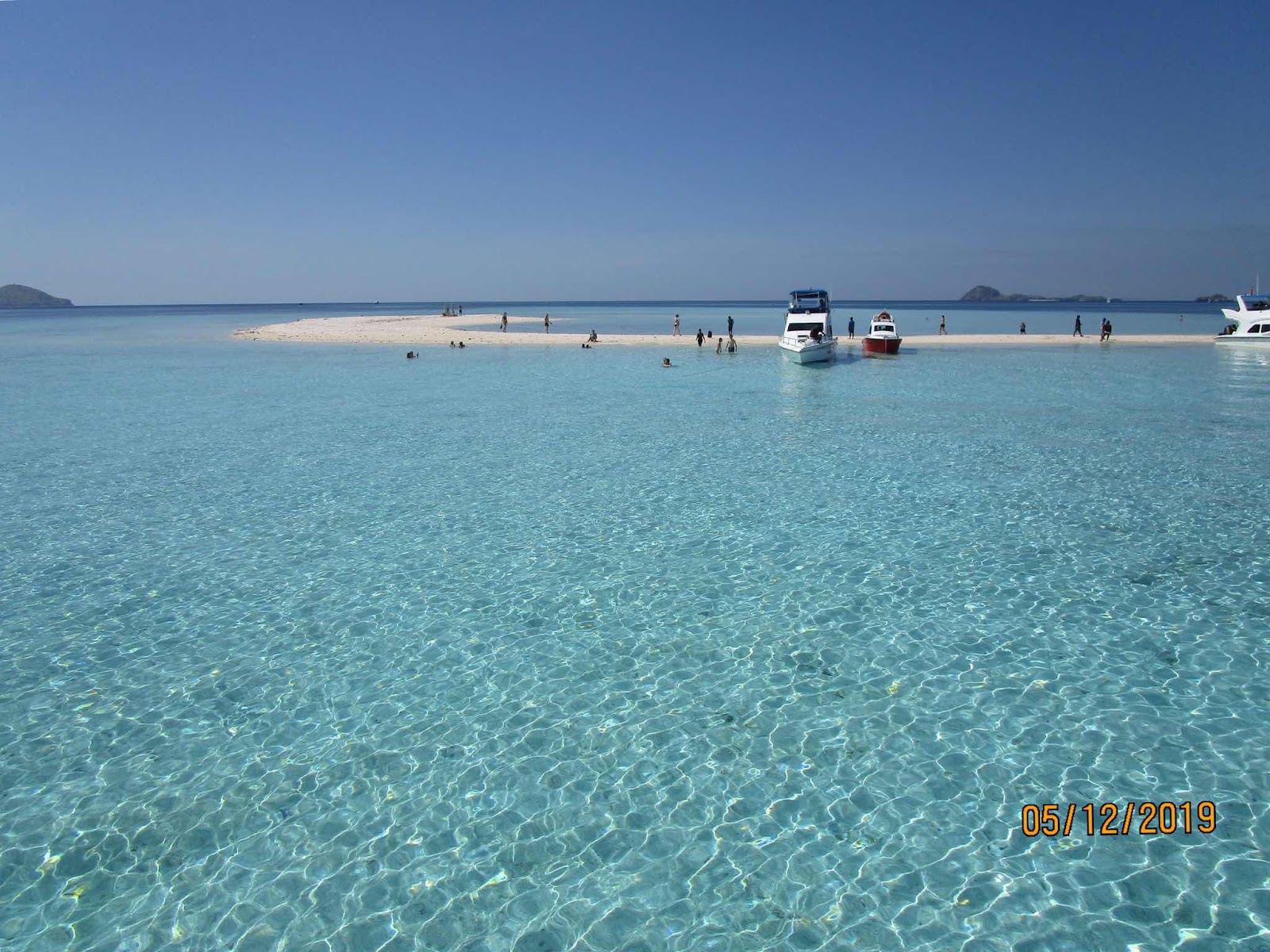
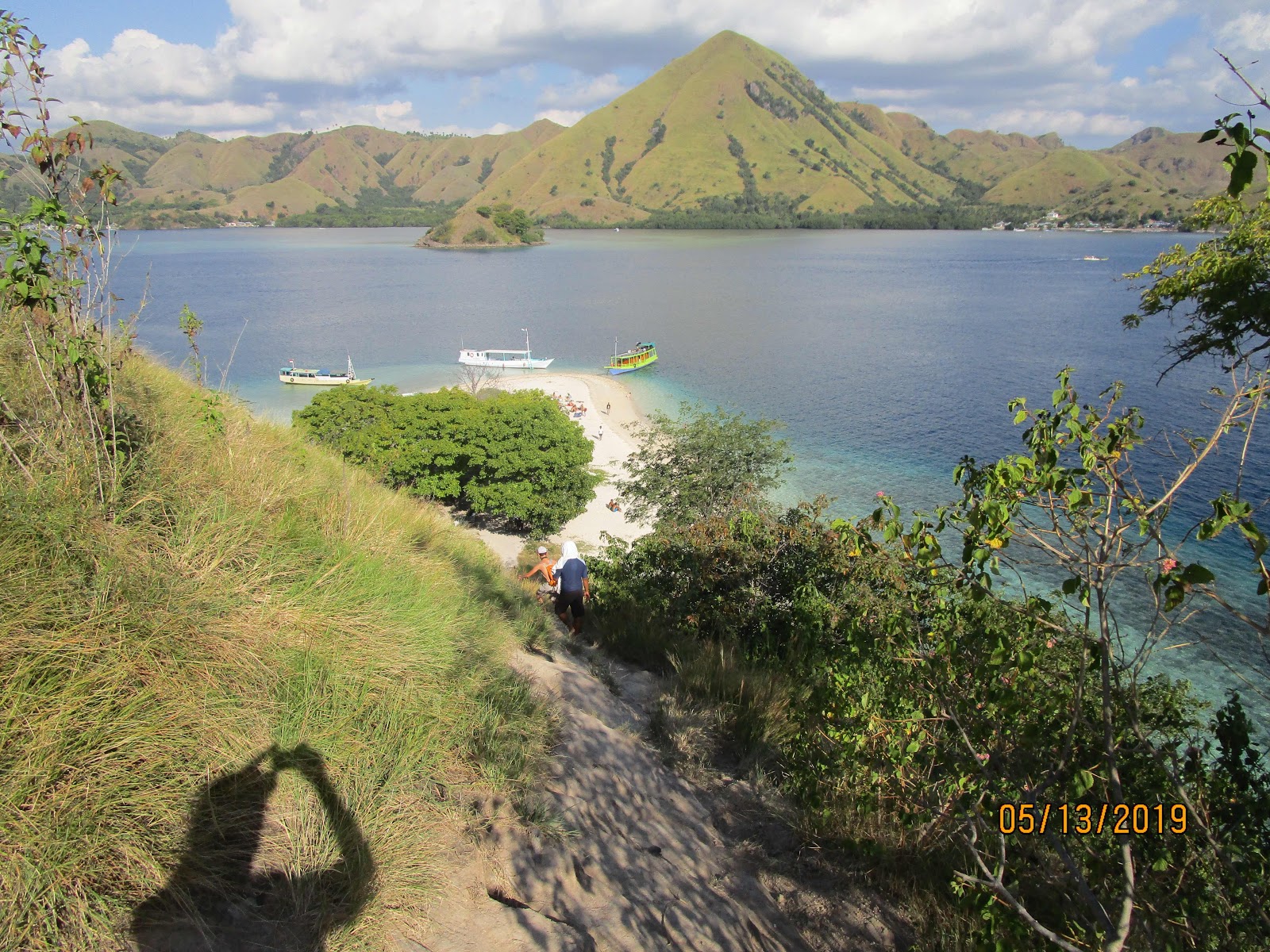
The tiny, eye brow shaped island.
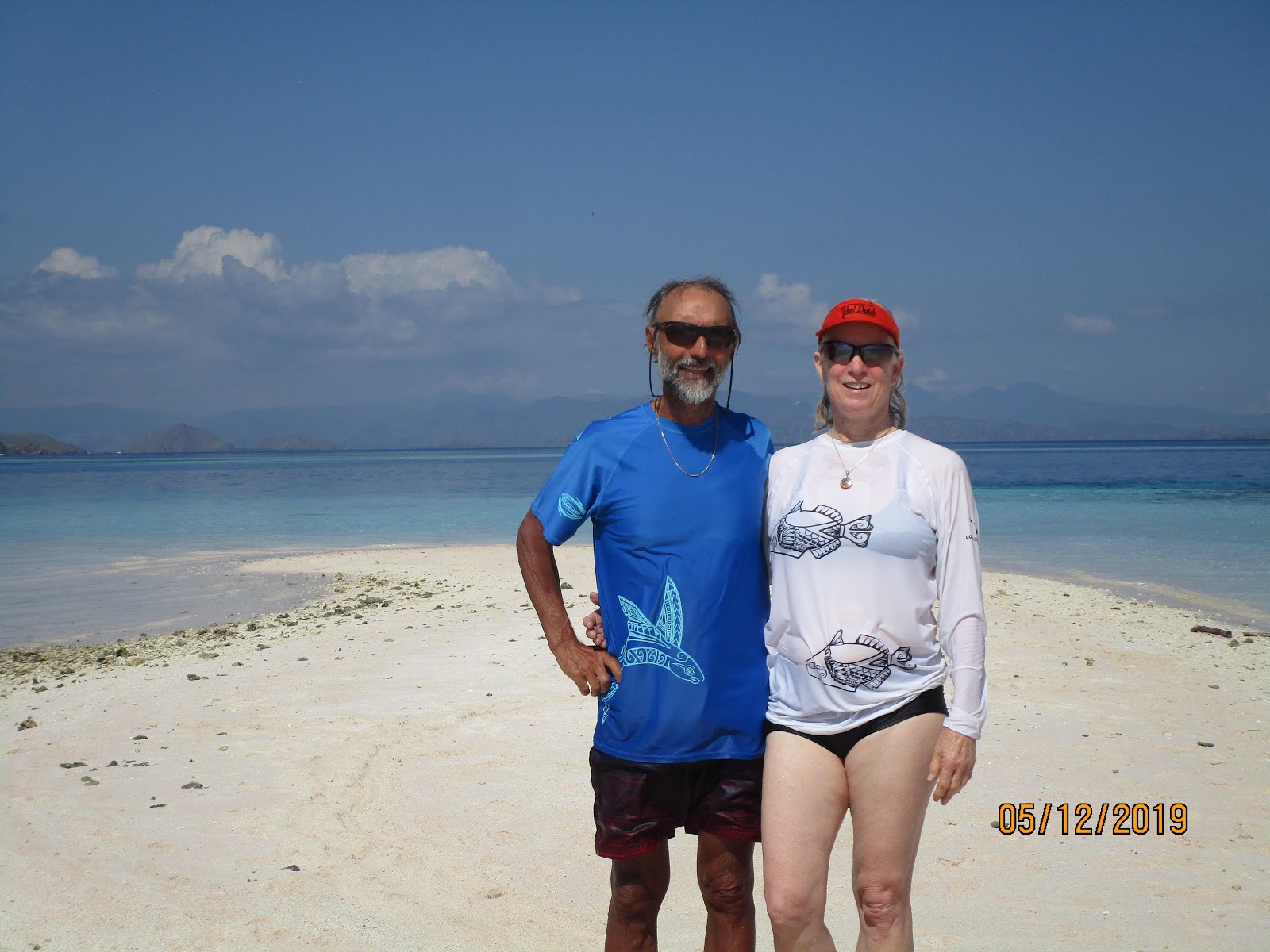
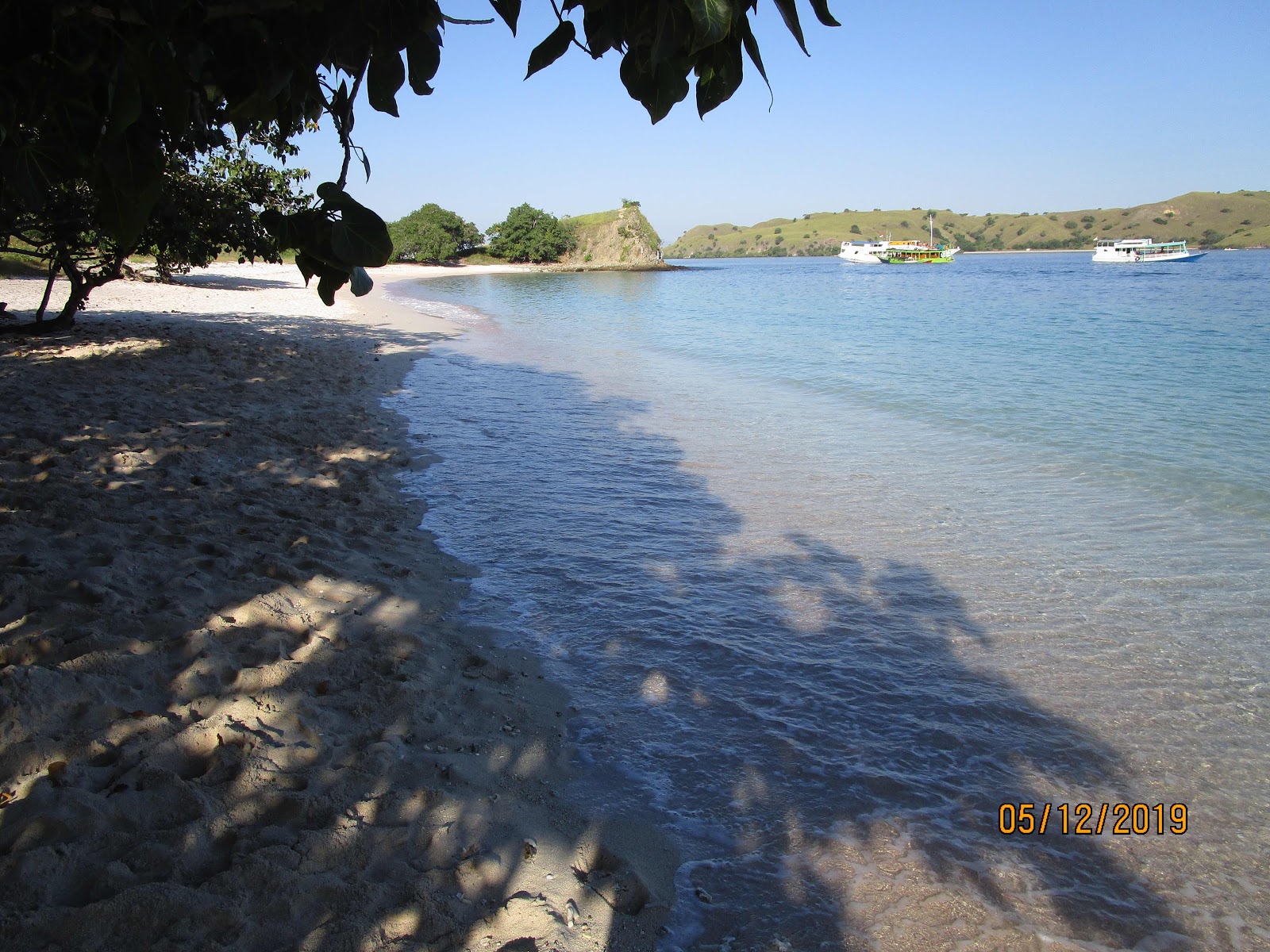
Only a slight tinge of pink was visible from Pink Beach.
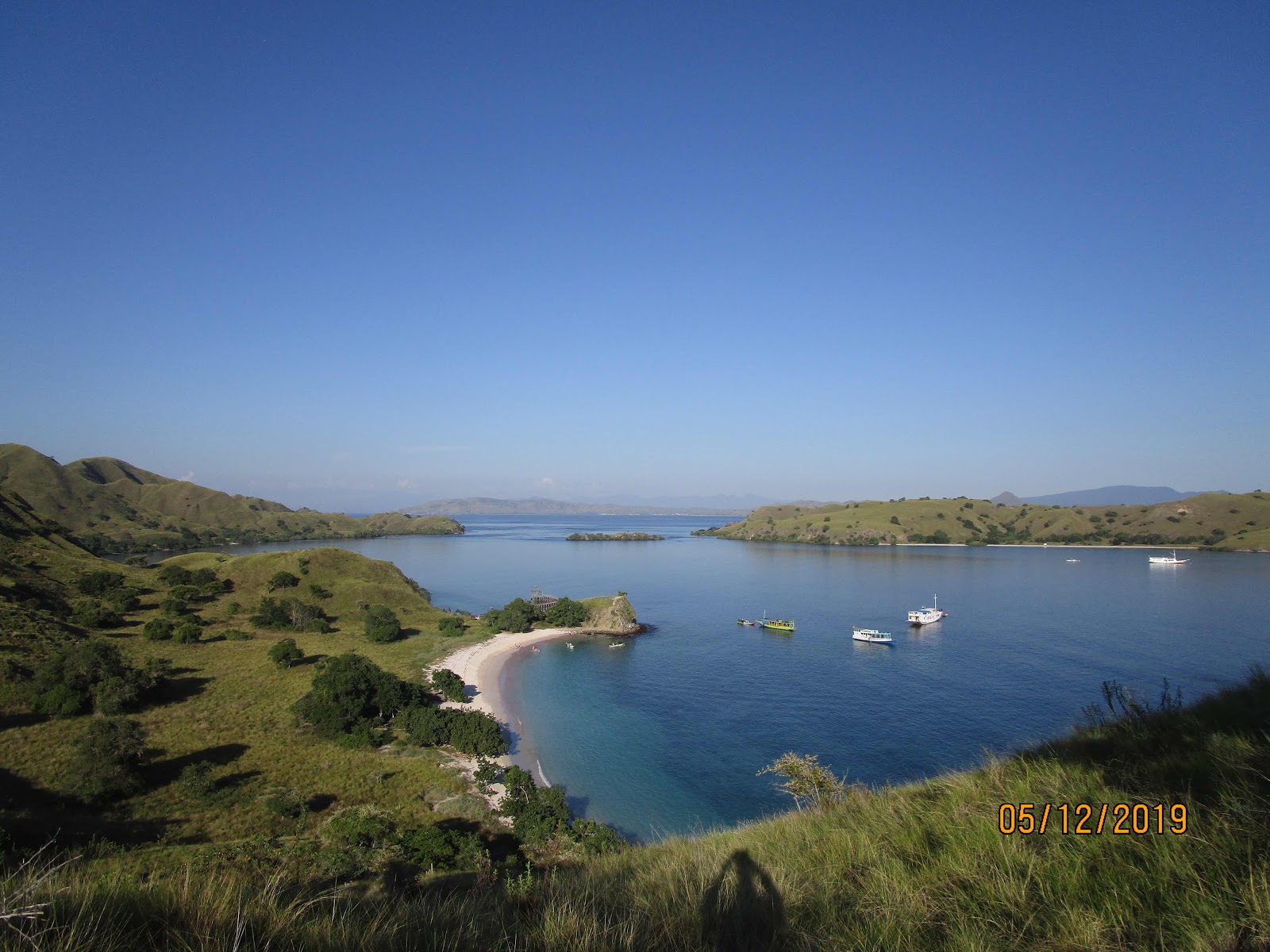
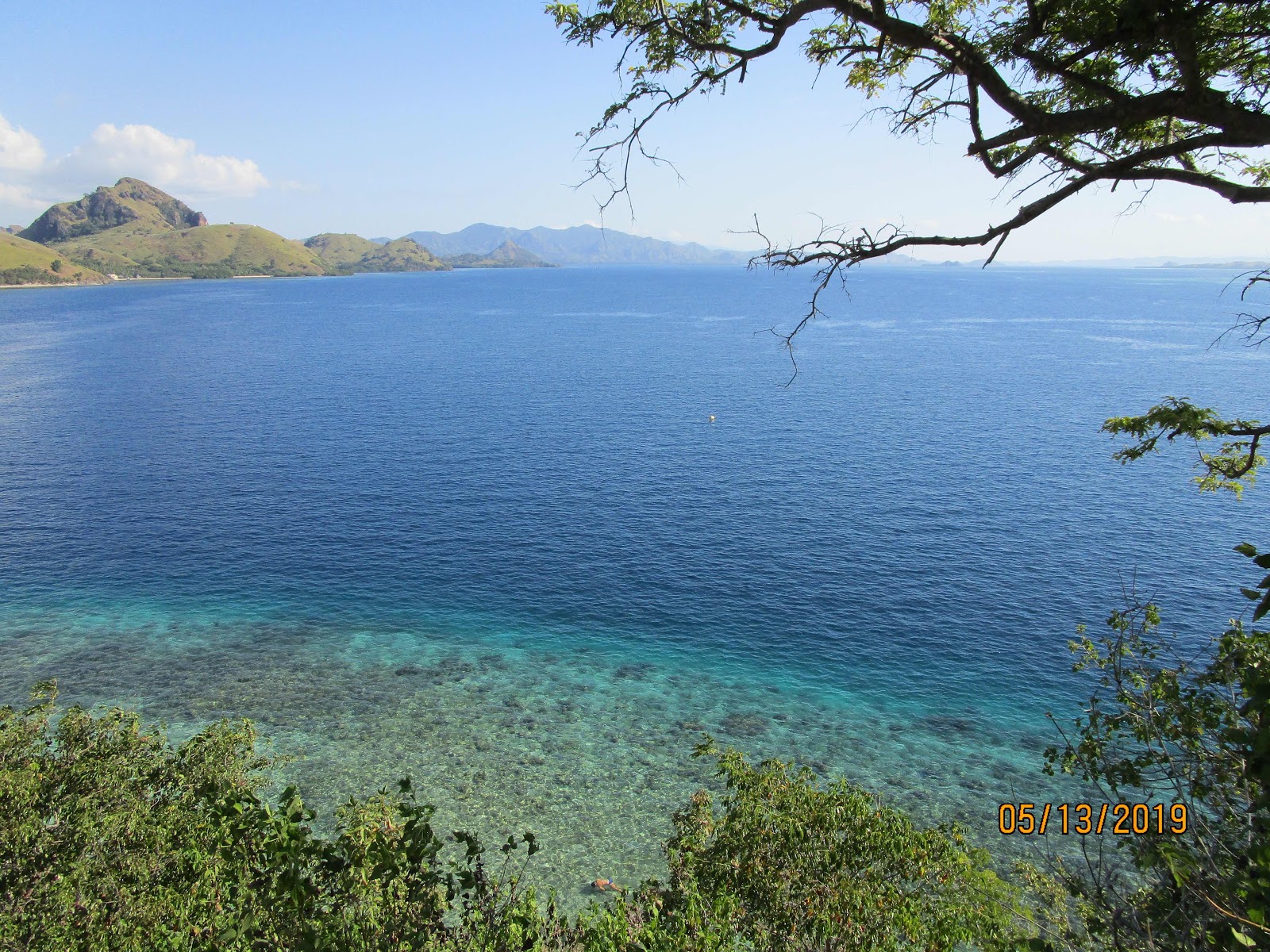
Marsy and I took a short hike up a hill top for a panoramic view of the bay.
The last activity of the day was to go to a pink sandy beach and take a hike to the hilltop. The sand on the beach is mixed with small parts of pink coral, giving the sand a slight pinkish hue. The view from atop the hill was excellent. That evening, we anchored at a nearby cove.
In the morning, after a strange breakfast (it consisted of toasted slices of bread - no butter, no jam, no fruit, no eggs, nothing - oh yes, there was coffee), the boat got underway. We arrived on the island of Komodo around 9am, docking at a big, concrete pier. We were greeted by a national park guide, who told us about what to expect and what we’d see.
Our guide explained to us, the habits of the dragons - what they eat, how they hunt, how they procreate and otherwise explained their behaviors. The Komodo dragons live a pretty solitary existence, except for procreating and eating. The female is in gestation about the same length of time as a human - 8-9 months. They lay between 18-30 eggs. The moment the eggs hatch, it’s every dragon baby for themselves. Weaker babies get eaten by their siblings or by an adult male dragon or even the mom. The live in the trees until they are two to three years old. Out of the 20-30 babies, perhaps two or three survive.
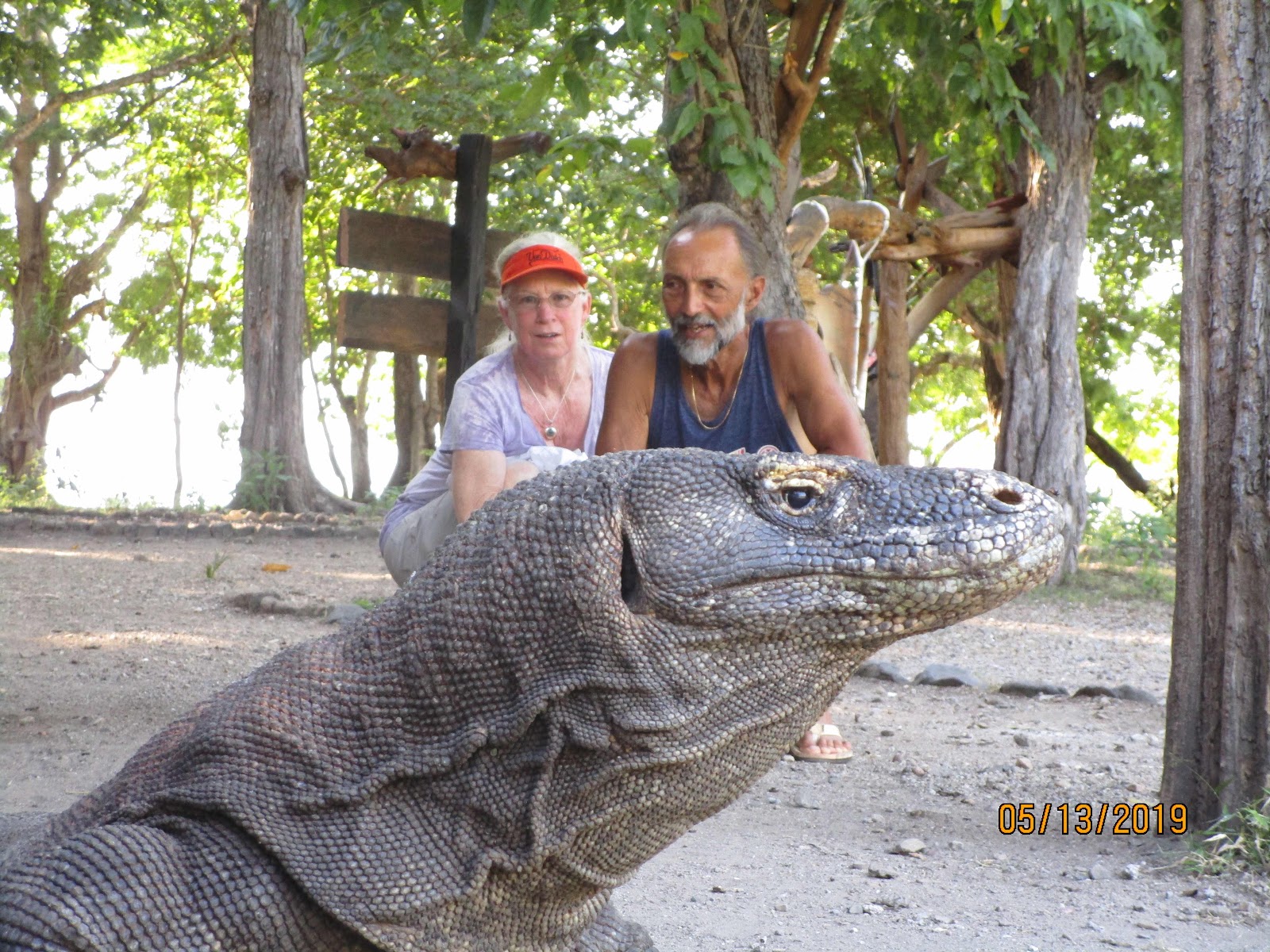
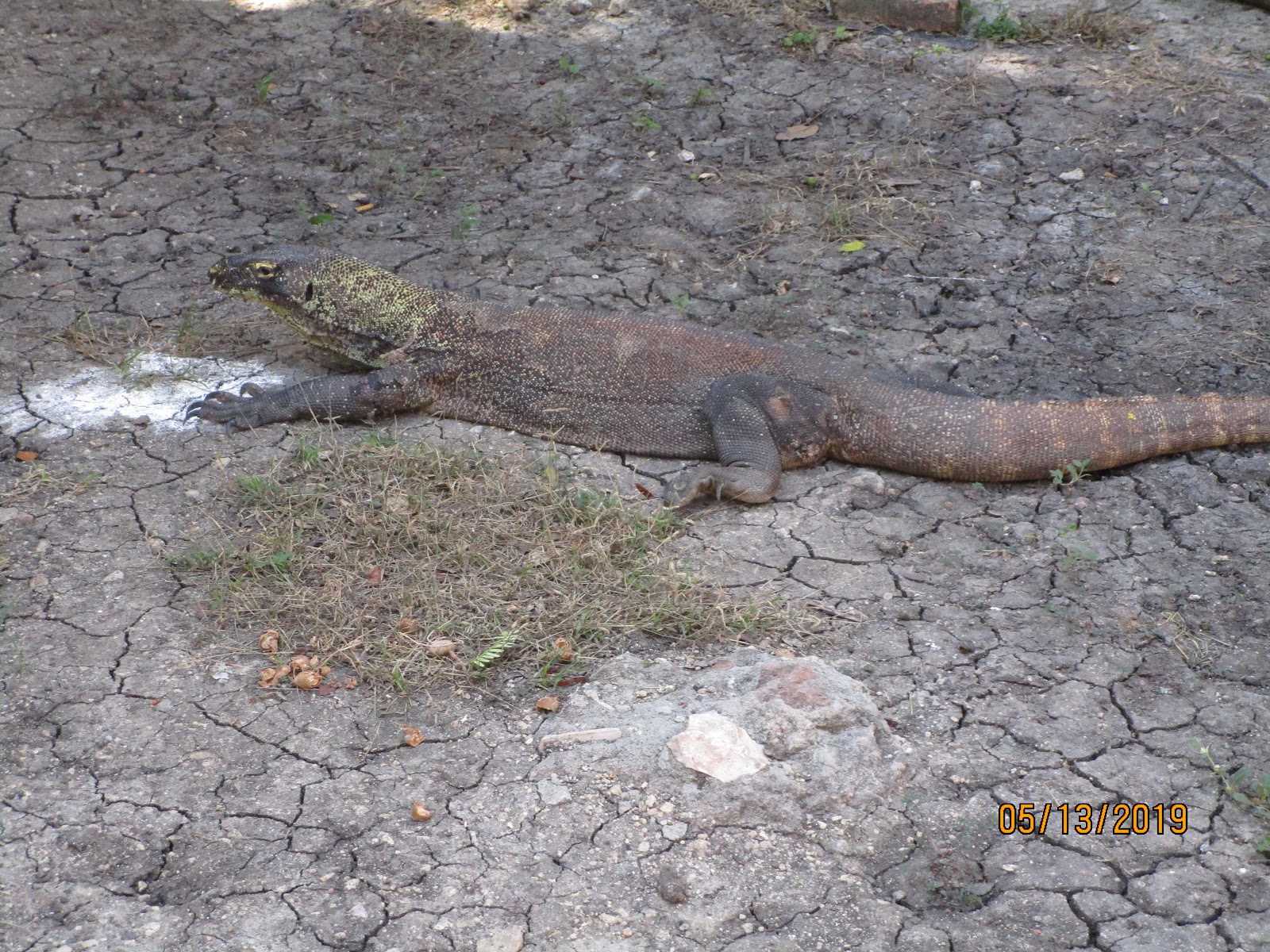
On our walk we didn’t see any dragons until we got to the compound’s restaurant. They don’t feed the dragons, but they tend to hang out in the area because they’re attracted to the smell. Only three dragons were lazily hanging around. On our walk we did encounter a huge mound of dirt that was a “nest” for dragon eggs. But as soon as the eggs hatch, the baby dragons climb up nearby trees for safety.
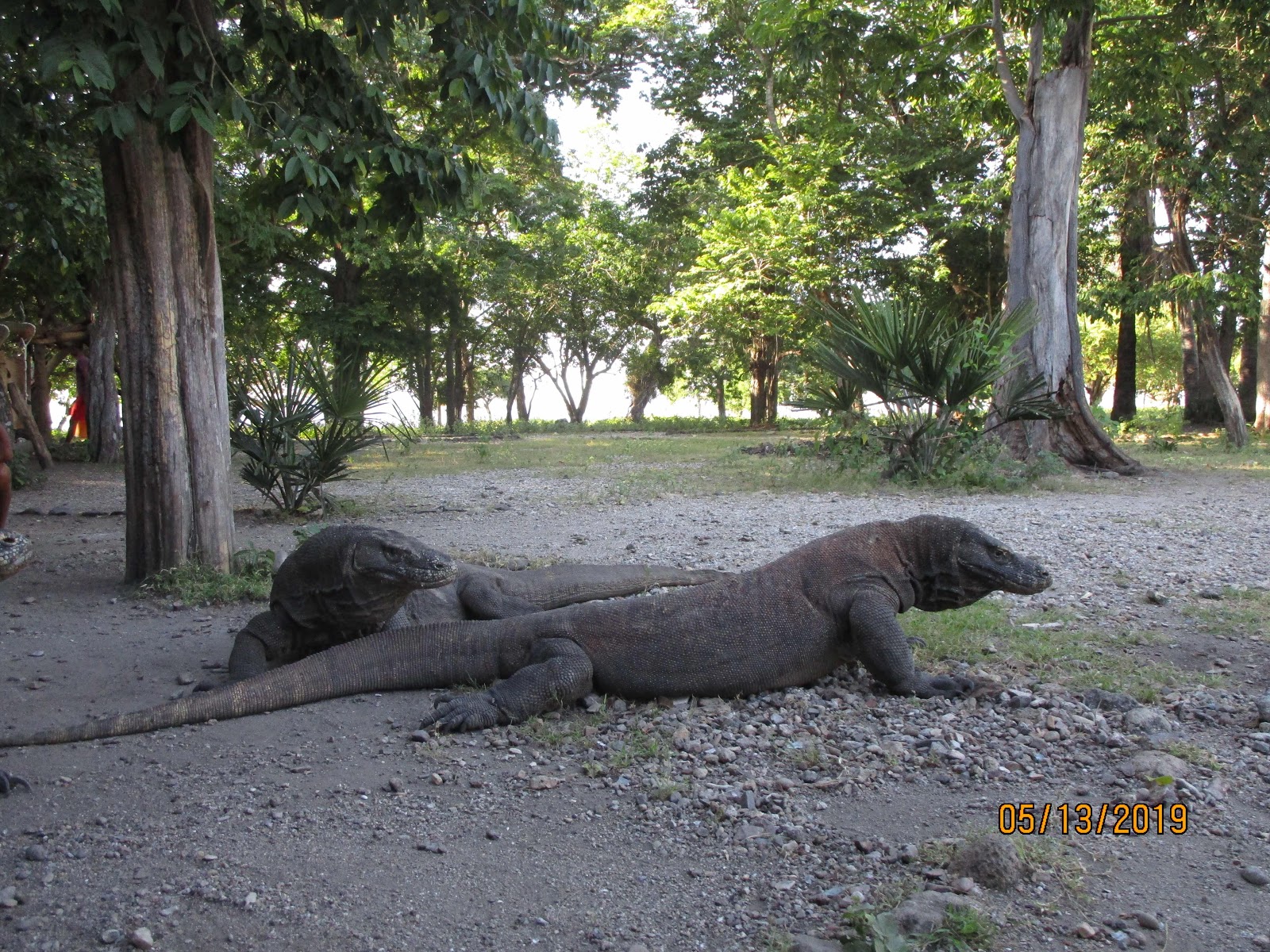
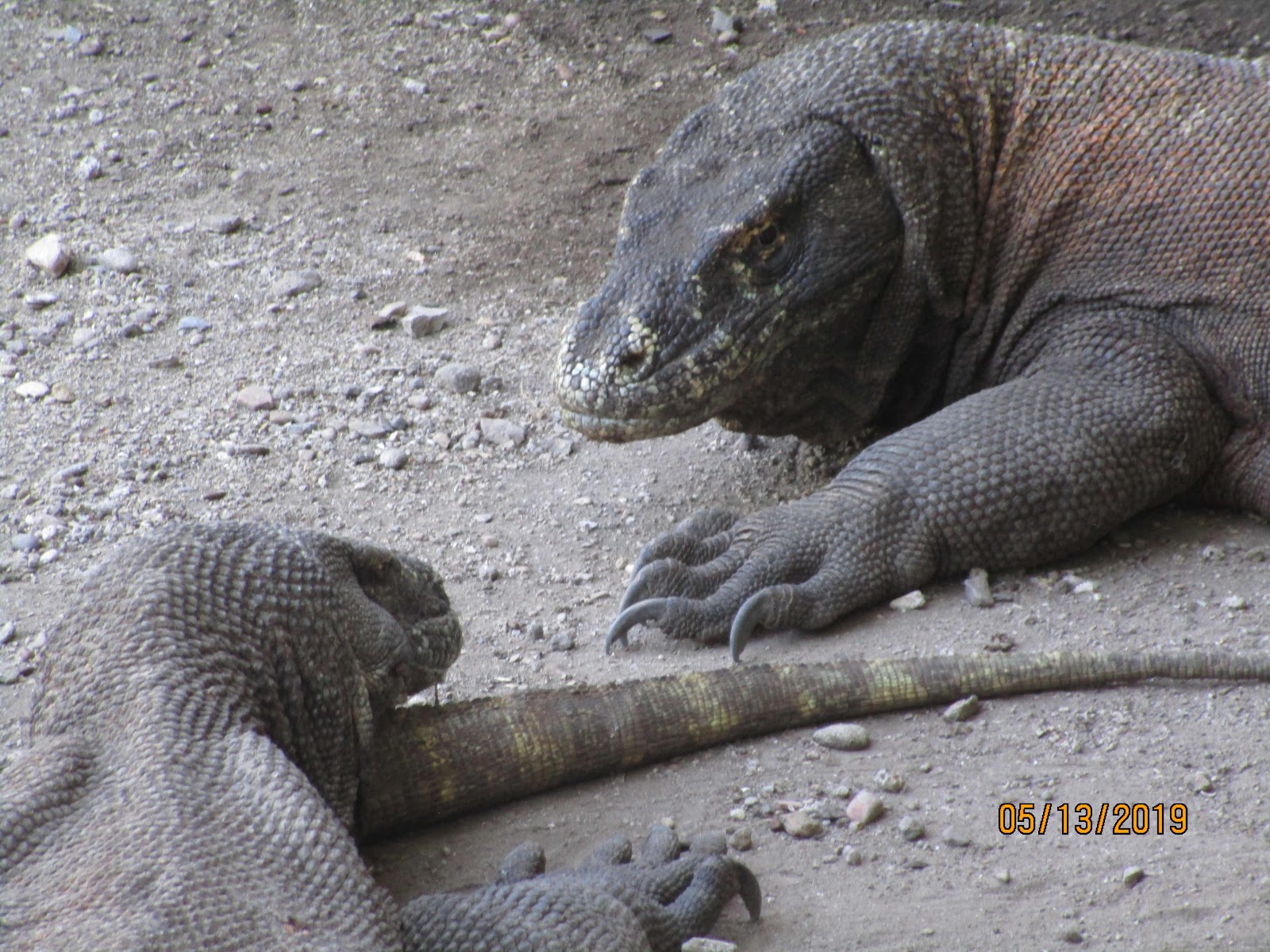
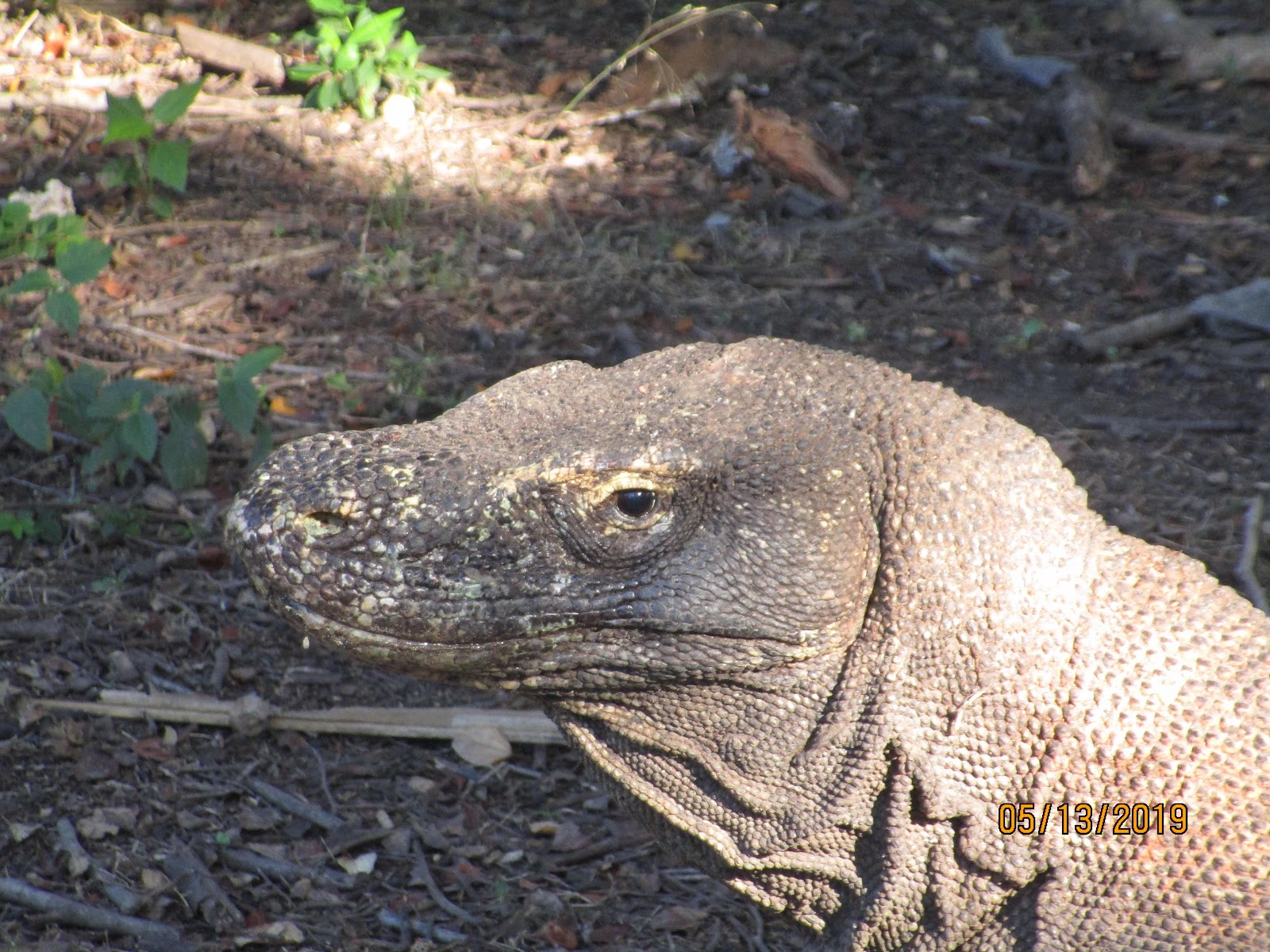
After our walk in Komodo National Park, we returned to the boat and headed for Loh Buaya National Park, on Rinca Island, another place with Komodo dragons (there are four islands in total where the dragons can be found).
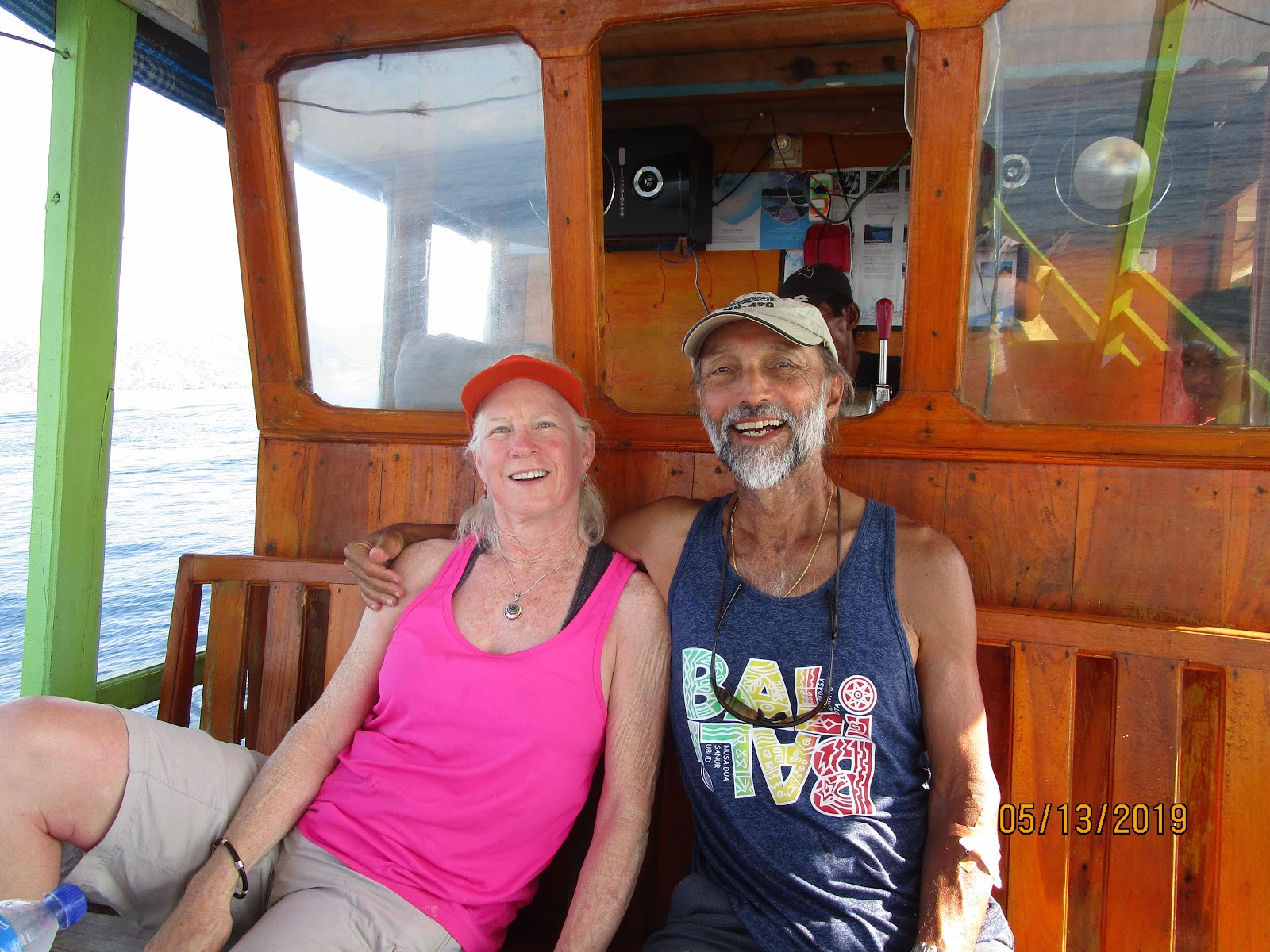
On our way to Rinca, we made a stop at an iconic national park with a spectacular panorama (after an arduous climb).

Once there, we again met with a nature guide who took us on a tour. On Rinca we encountered many more dragons, but again, most of the ones we saw were at or adjacent to areas where humans consume food. The guide explained that the dragons stalk their prey and when the opportunity presents itself, they’ll bite them and “inject” a lethal venom and bacteria mix into their victims blood stream. The prey (deer, buffalo and wild boar) don’t immediately die, so the dragons follow them until they succumb to the lethal dose of venom. That’s when the dragons begin their feast.
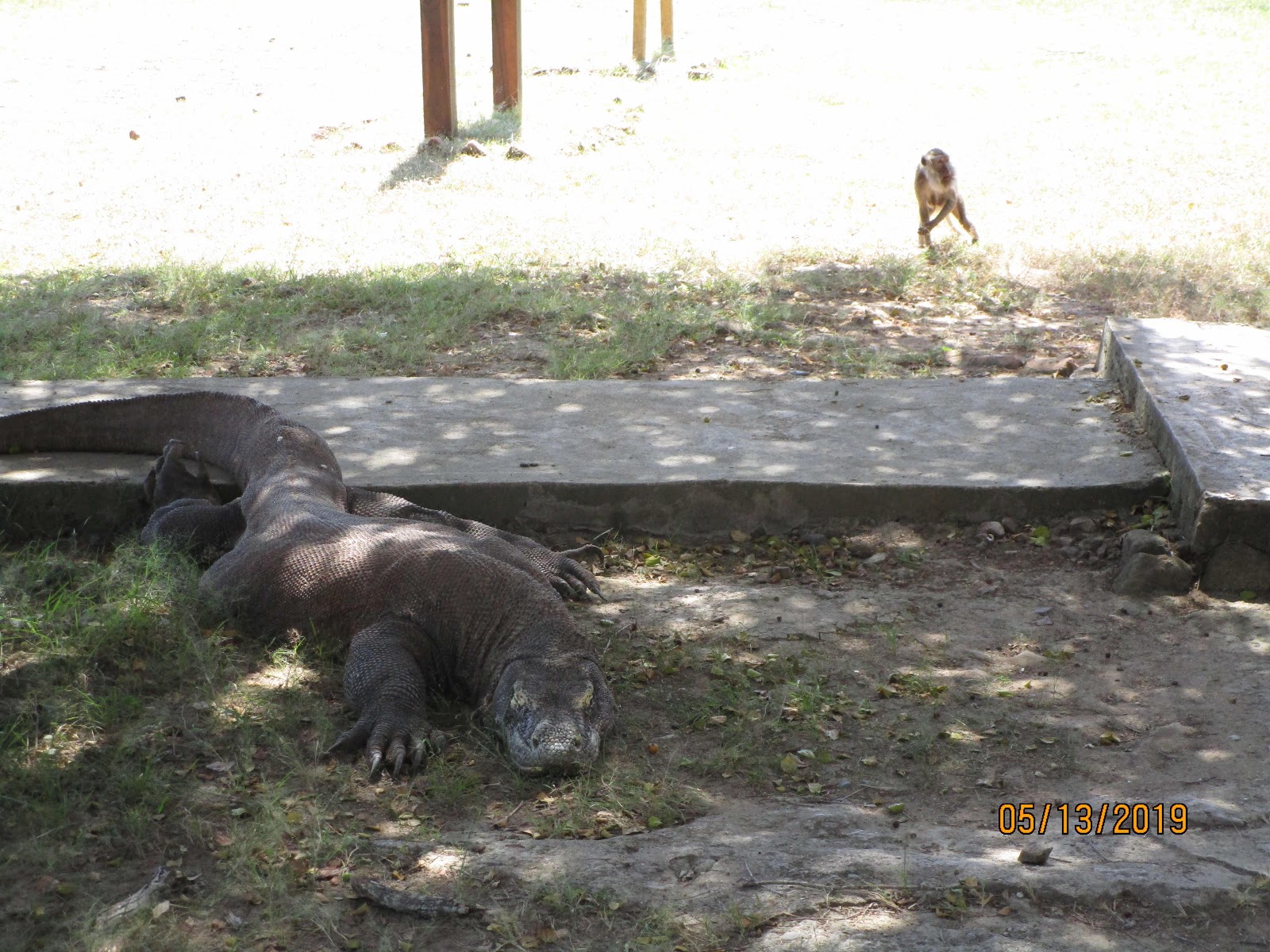
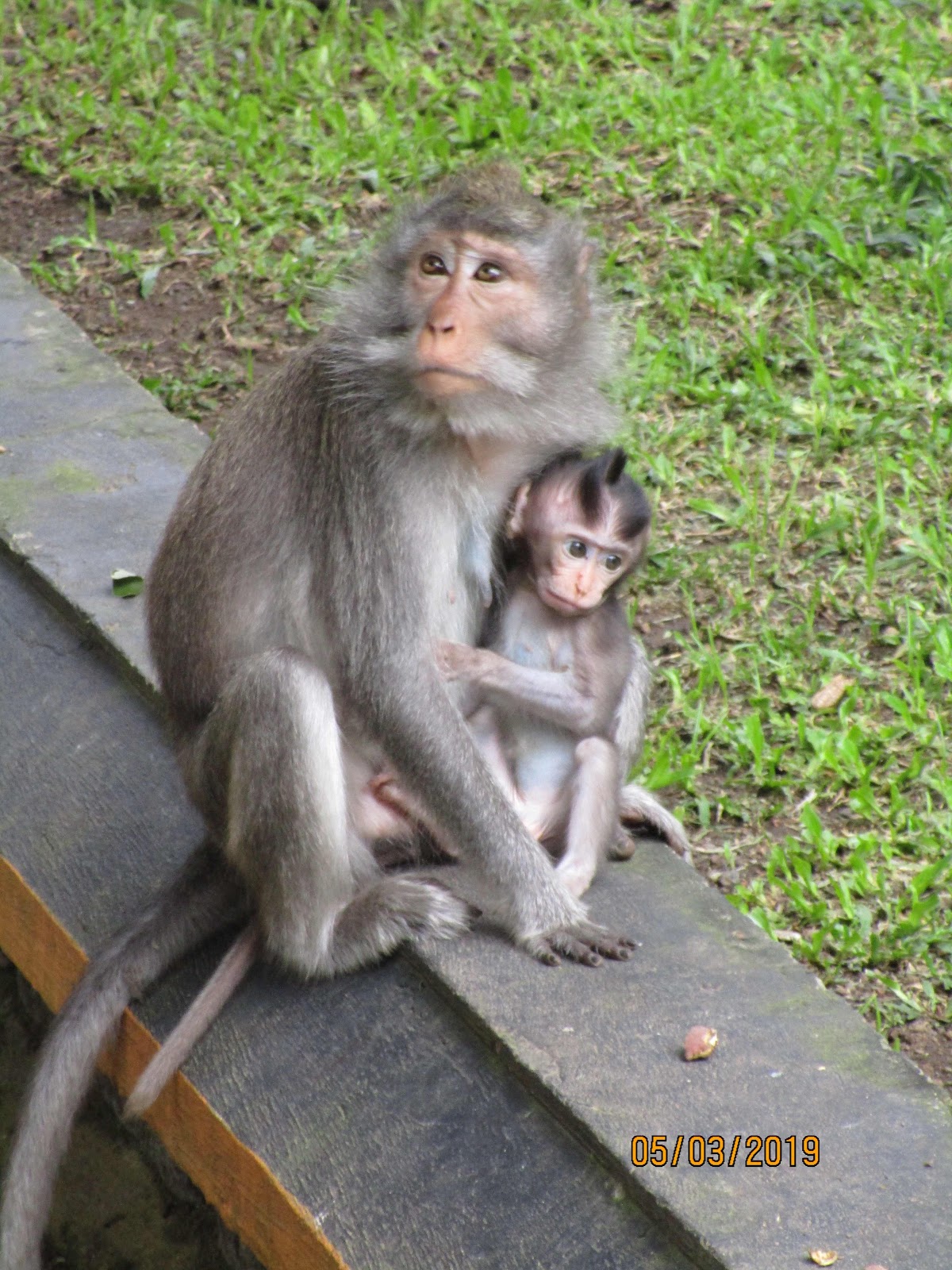
As we approached an area habited by the dragons, we were greeted by monkeys and water buffaloes (not pictured).
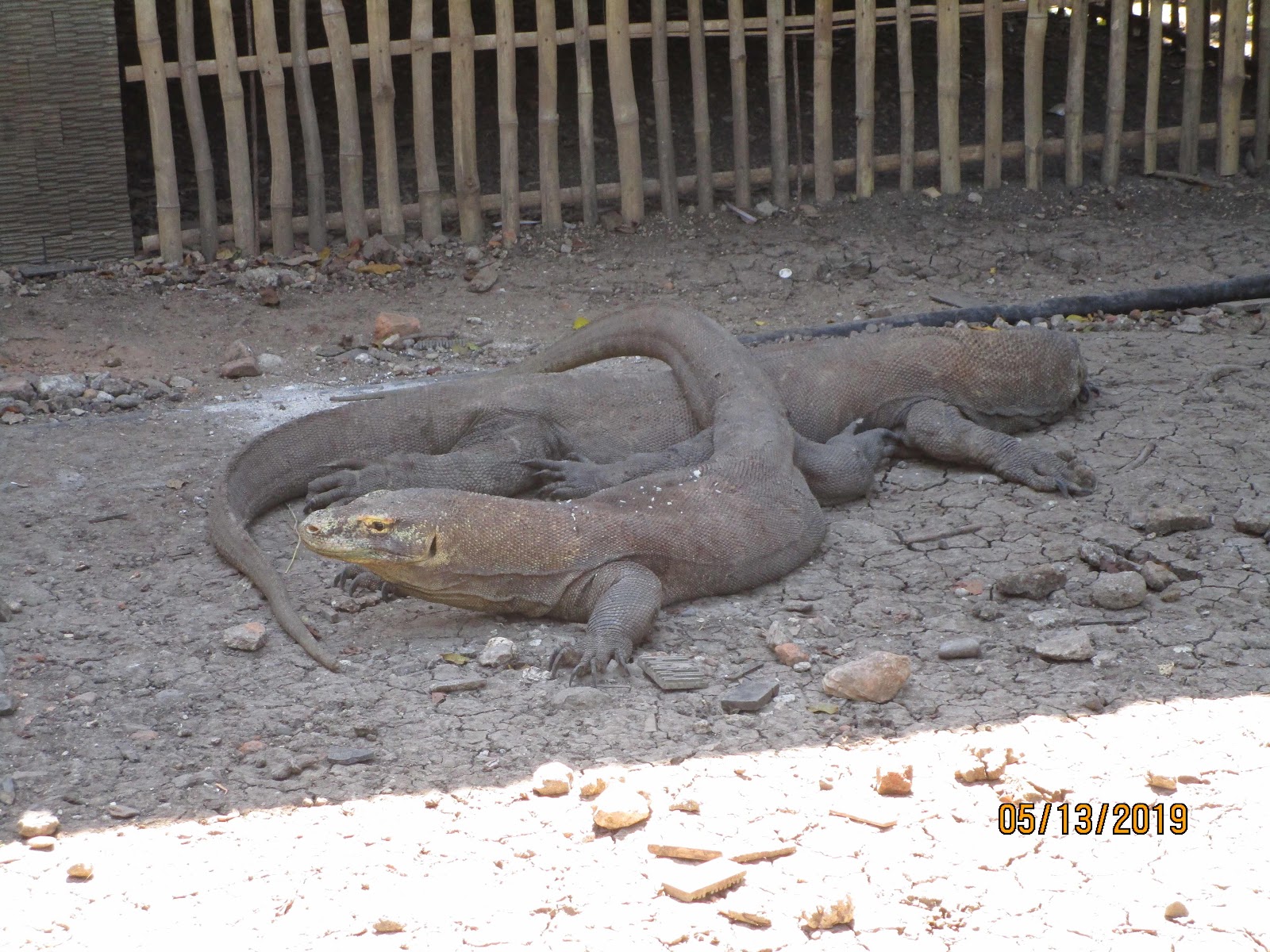
Upon leaving the island reserve, we stopped at one more beach that offered great panoramic views of the area. It was a small island about half an hour away from Labuan Bajo. It was then time to head back to Wae Molas hotel for one more night in Labuan Bajo before flying back to Bali.